California Permit Test Cheat Sheet
A condensed, skimmable recap of the rules most worth knowing cold before your exam — distilled from our full California practice question bank. This isn't a replacement for the California Driver Handbook; confirm anything time-sensitive with CA DMV.
Right-of-Way
- At a 4-way stop, the first vehicle to arrive goes first; if two arrive together, the driver on the left yields to the driver on the right.
- Vehicles already inside a roundabout have the right-of-way — entering drivers must yield and wait for a safe gap.
- Every intersection has a legal crosswalk, marked or not — yield to pedestrians in your half of the road or close enough to be a hazard.
- On a steep grade, the uphill vehicle has the right-of-way; the downhill vehicle backs up to a safe spot if needed.
Traffic Signals
- Solid red = full stop; right turn on red is allowed after stopping unless posted otherwise.
- Flashing red = treat it like a stop sign. Flashing yellow = slow down and proceed with caution, no full stop required.
- A green arrow gives a protected turn — oncoming traffic has a red light, so you don't need to yield to them.
Traffic Signs
- Shape and color carry meaning: red octagon = STOP, red/white downward triangle = YIELD, yellow diamond = warning, red circle-slash = prohibited, orange = construction.
- Green = guide/directional, blue = services (gas, food, hospital), brown = recreation, white rectangle = regulatory (e.g. speed limit).
- The pentagon shape is reserved for school signs; the round sign with an X and two R's warns of a railroad crossing ahead.
Speed Limits
- Default in business/residential areas: 25 mph. Near a school with children present: 25 mph (sometimes 15 mph in a marked school zone).
- Max on most California highways: 70 mph, unless posted lower. Vehicles towing a trailer or with 3+ axles: 55 mph max, even where the highway is posted higher.
- The basic speed law always applies — slow below the posted limit in rain, fog, or heavy traffic even if no lower limit is posted.
Following Distance
- Keep at least a 3-second gap in good conditions; add more time in rain, fog, heavy traffic, or behind motorcycles and large trucks.
- Check it yourself: note when the vehicle ahead passes a fixed point, then count seconds until you reach that same point.
Turning & Lane Changes
- Signal continuously for at least 100 feet before turning or changing lanes.
- Right turns start and end in the lane closest to the curb; left turns end just right of the center line of the road you're entering.
- Before turning right, check for cyclists in your right blind spot — a common cause of right-hook collisions.
Passing & Lane Markings
- Never pass on the shoulder. Confirm enough clear distance ahead in the oncoming lane before starting, and don't return until you see the passed vehicle's front end in your mirror.
- Double solid yellow = no passing either direction. A broken yellow line on your side means you may pass when clear.
- A diamond lane marking is an HOV lane — it requires the posted minimum number of occupants.
School Buses
- Stop for a school bus with flashing red lights and an extended stop arm — both directions on an undivided road, only your direction if there's a physical median.
- Stay at least 10 feet back and remain stopped until the lights stop flashing and the arm retracts.
Railroad Crossings
- Stop at least 15 feet from the nearest rail when signals, gates, or a flagger indicate a train.
- Never drive around a lowered gate, even if no train is visible. If your vehicle stalls on the tracks, get everyone out and away immediately.
Move Over & Emergency Vehicles
- Move over one lane for a stopped emergency, tow, or maintenance vehicle with flashing lights if safe; slow down if you can't change lanes.
- Never follow an emergency vehicle responding to a call closer than 300 feet.
- Pull right and stop for an approaching emergency vehicle — but never stop inside an intersection; clear it first.
DUI, Alcohol & Drugs
- BAC limits: 0.08% for drivers 21+, 0.01% zero-tolerance for under 21, 0.04% for commercial drivers.
- Implied consent: driving in California means you've agreed to chemical testing if lawfully arrested for DUI — refusing brings an automatic license suspension, separate from any DUI conviction.
- Impairment from legal or prescription drugs (including cannabis) can still result in a DUI just like alcohol.
Distracted Driving
- Holding a phone while driving is illegal; hands-free is allowed for drivers 21+. Provisional (under-18) license holders may not use a phone at all, even hands-free.
- The brain can't truly focus on two demanding tasks at once — it switches rapidly between them, which slows your driving reaction time.
Seatbelts & Child Safety
- Every occupant, front and back, must wear a seatbelt.
- Children under 8 (or under 4'9") ride in the back in a car seat or booster.
- Never place a rear-facing car seat in front of an active airbag.
Parking
- Curb colors: red = no stopping ever, blue = disabled placard/plate only, white = brief passenger loading, yellow = loading/freight, green = timed parking.
- Park at least 15 feet from a fire hydrant.
- Uphill with no curb: turn wheels away from the road. Downhill facing a curb: turn wheels into the curb.
Freeway Driving
- Use the acceleration lane to match traffic speed before merging — you don't automatically have the right-of-way entering a freeway.
- Signal and move into the exit lane well before your exit. If you miss it, continue safely to the next exit — never stop, back up, or U-turn on a freeway.
Mountain Driving
- Downshift to a lower gear before a steep downgrade to use engine braking and avoid overheating your brakes.
- Tap your horn on narrow, blind mountain curves to alert oncoming traffic you can't see.
Weather Conditions
- If you start hydroplaning, ease off the gas — don't brake or turn suddenly.
- Rain right after a dry spell is often the slickest, since it lifts built-up oil off the pavement before washing it away.
- In fog, use low beams — high beams reflect off the fog and create glare.
Work Zones
- Fines often double for violations in a posted construction or maintenance zone.
- A flagger's signals take priority over the standard signs and signals in that area.
Roundabouts
- Traffic moves counterclockwise; yield to vehicles already circulating before entering.
- Signal right just before your exit. If you miss it, just go around again rather than stopping or reversing.
Sharing the Road with Large Vehicles
- If you can't see a truck driver's face in their mirror, they likely can't see you either.
- Trucks and buses often swing wide before a right turn — never try to squeeze into the gap on their right.
Bicycles
- Leave at least 3 feet of clearance when passing a bicyclist, or slow down and pass at a safe distance if 3 feet isn't possible.
- Check for cyclists in your right blind spot before turning right — a common cause of right-hook collisions.
- Check for approaching cyclists before opening a car door.
Insurance & Registration
- Carry proof of financial responsibility (usually liability insurance) and current registration.
- Be ready to show your license, registration, and insurance at any traffic stop.
Licensing & Provisional Rules
- Provisional (under-18) license: no driving 11 p.m.-5 a.m. and no passengers under 20, unsupervised, for the first 12 months.
- Requires 50+ hours of supervised practice (10 at night) before testing; a supervising licensed driver 25+ must always be present with a permit.
- An instruction permit is generally valid for 12 months from issue.
After a Collision
- Check for injuries and call 911 first, before handling paperwork.
- Stop and exchange name, address, registration, license, and insurance information with everyone involved.
- Report to the DMV (SR-1) if there's injury, death, or damage above the reporting threshold. Failing to stop and exchange info is a hit-and-run.
Signs to Know
Quick visual recap of commonly tested signs — see the full Permit practice test for sign-recognition questions.
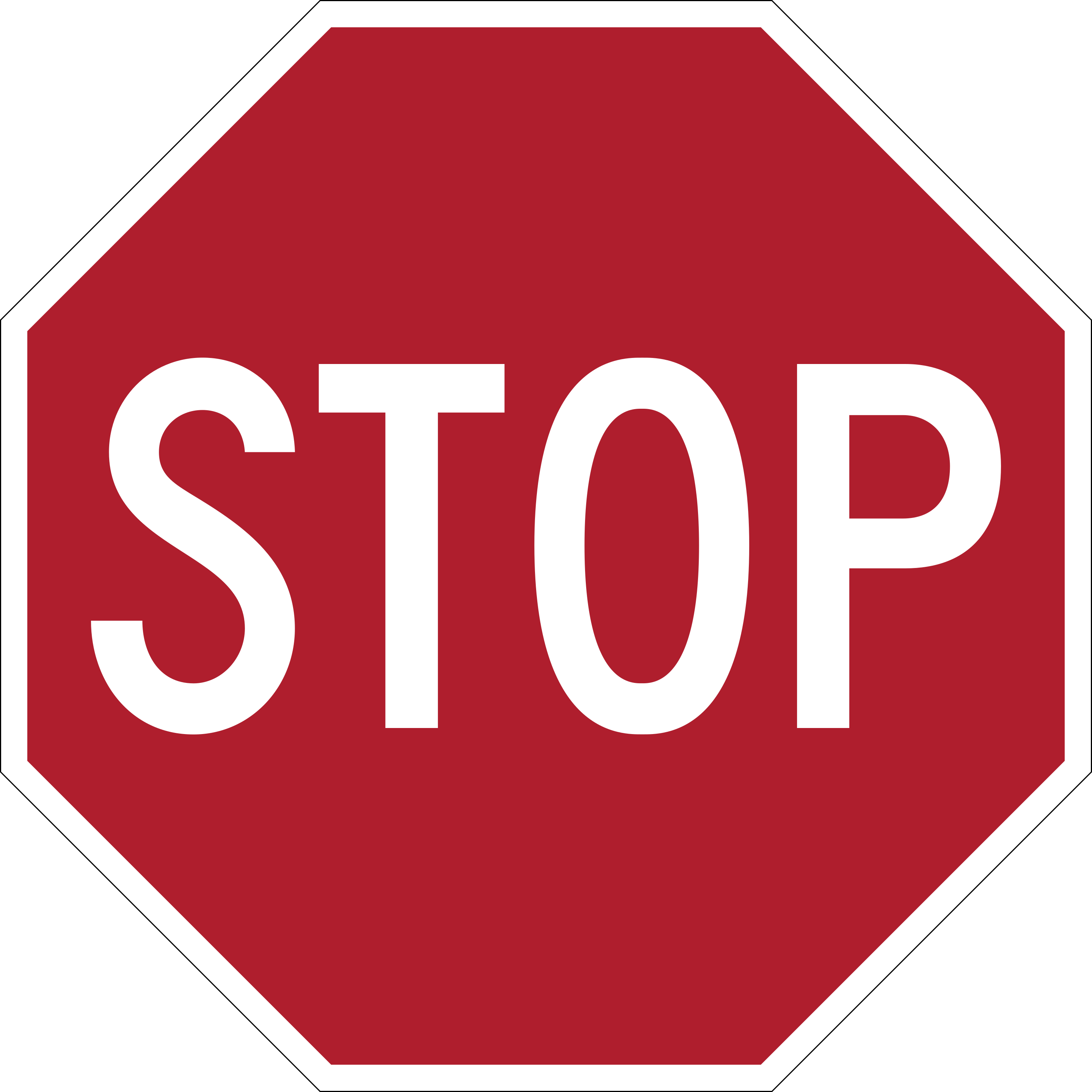
Come to a complete stop, then proceed only when it is safe to do so
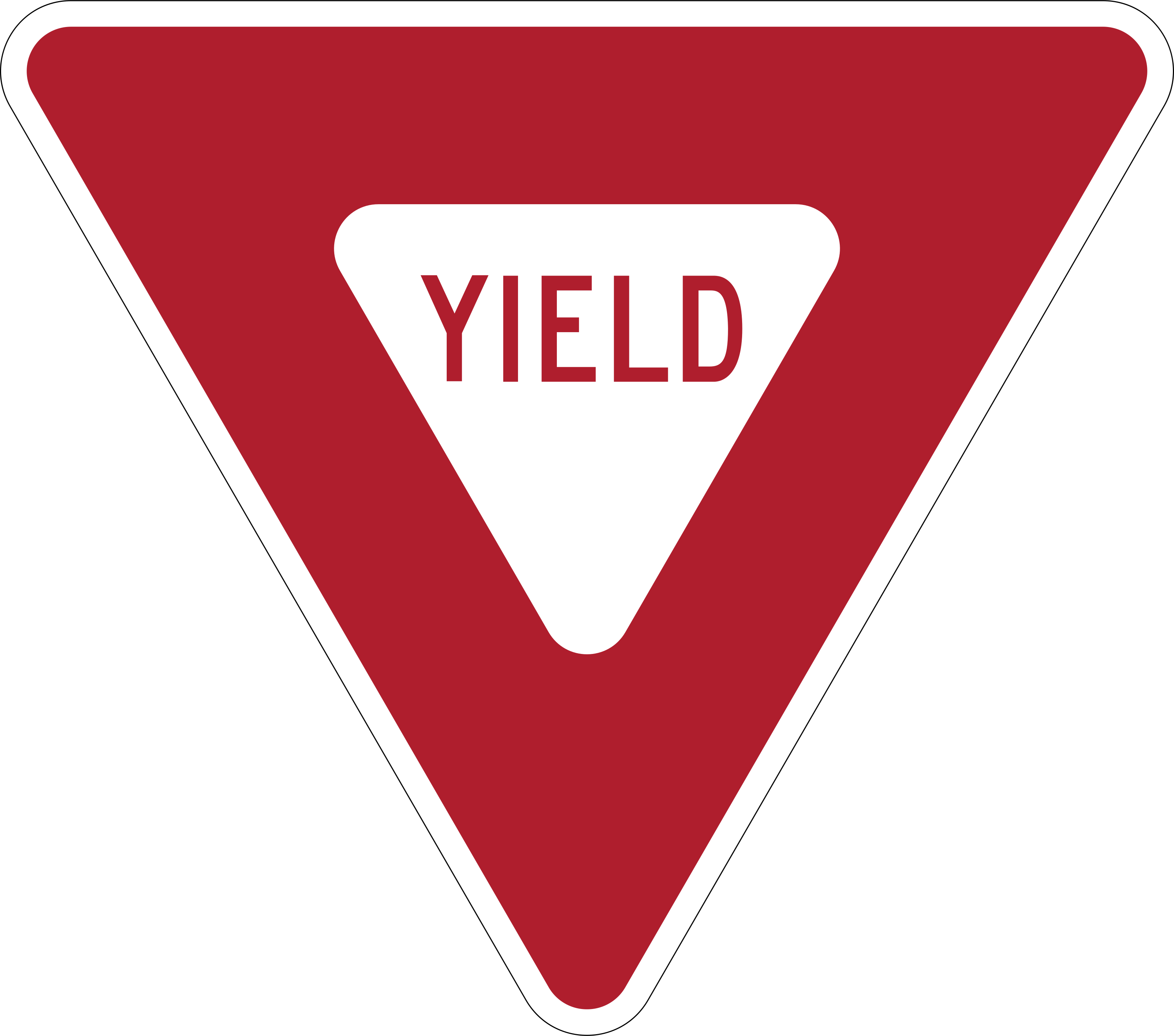
Slow down and be ready to stop, giving the right-of-way to other traffic or pedestrians
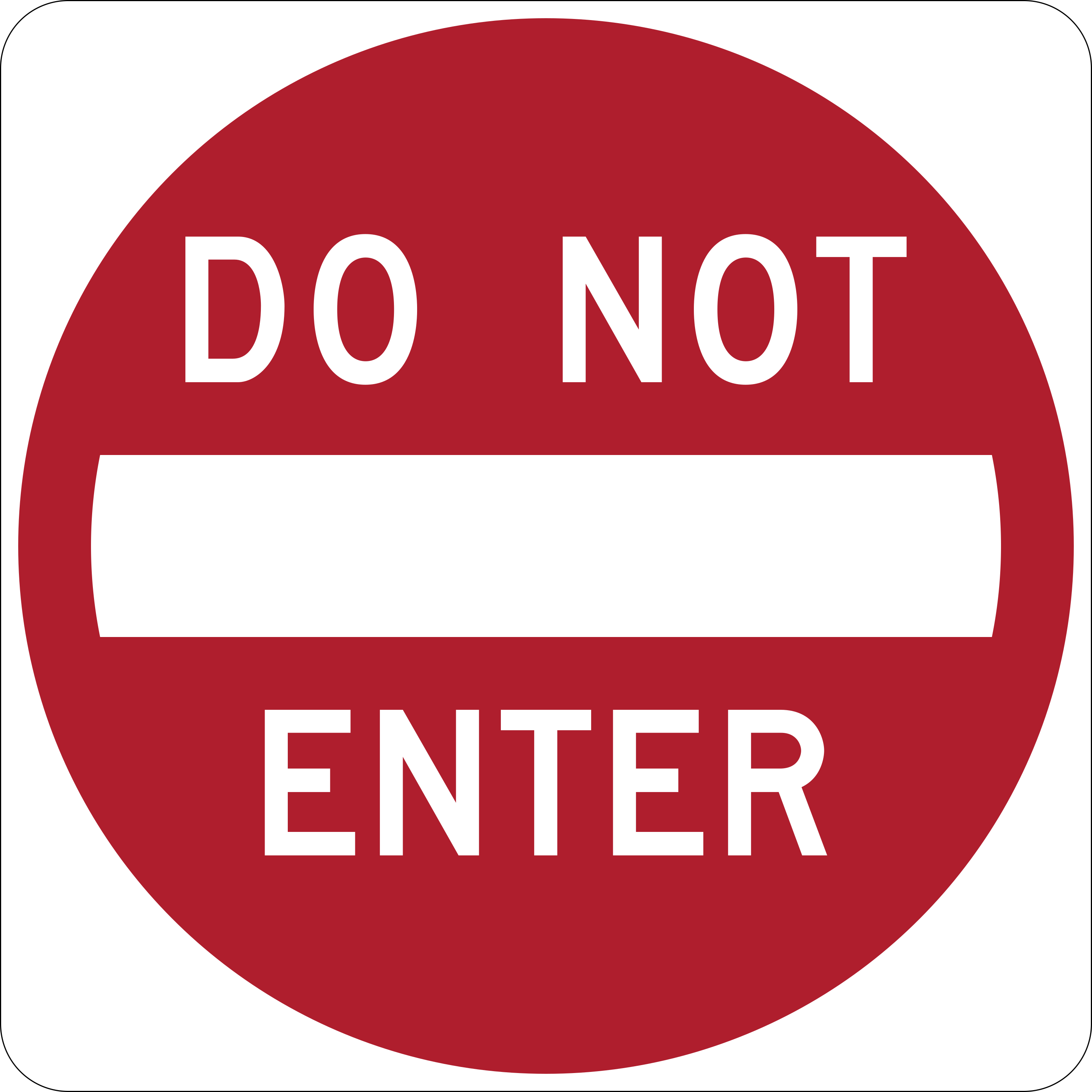
Do not drive past this sign in this direction; the roadway is closed to traffic entering here
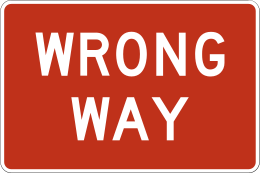
You are driving against the flow of traffic and must safely turn around or stop immediately
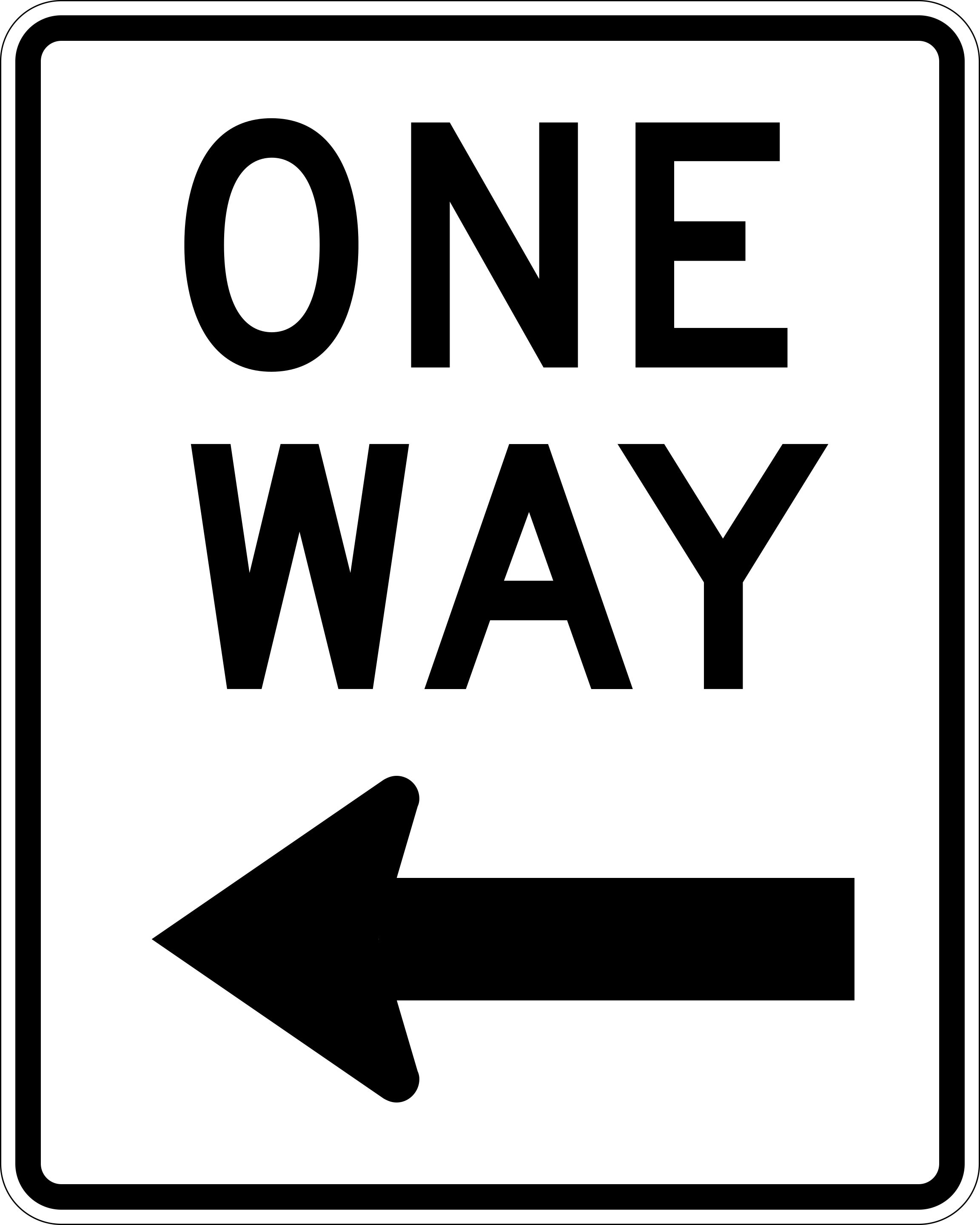
Traffic on this road or lane may only travel in the direction the arrow points
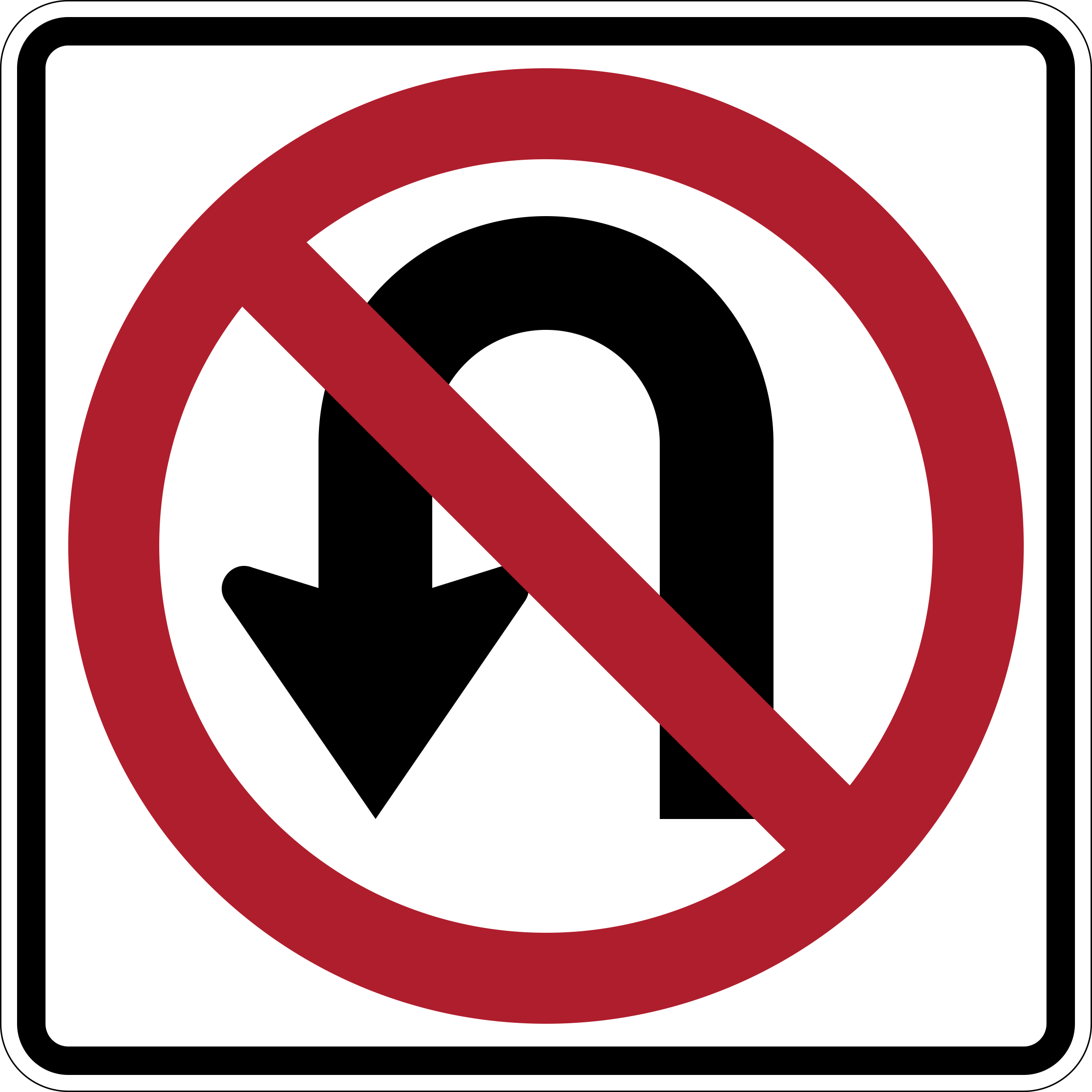
Making a U-turn is prohibited at this location
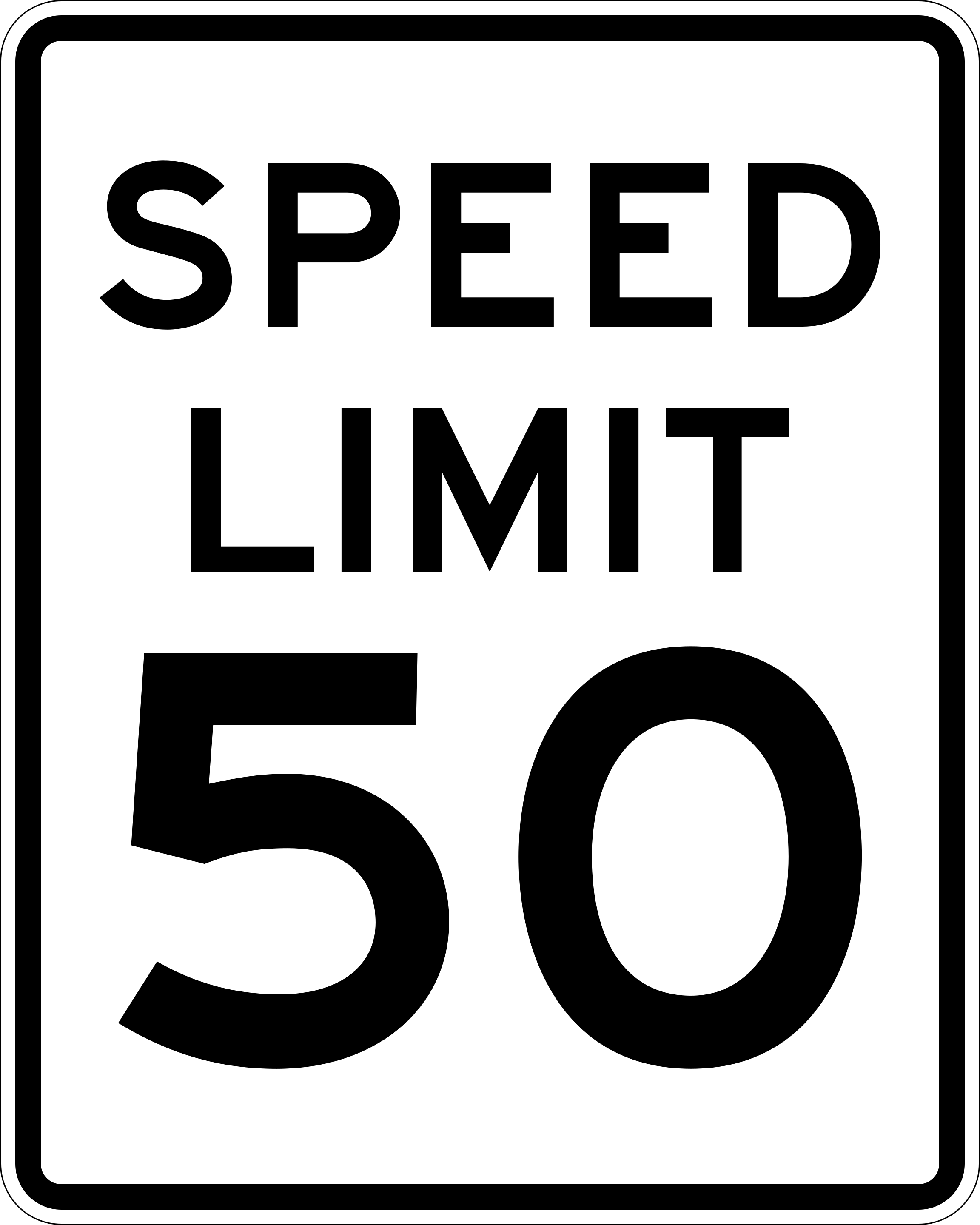
The maximum legal speed under normal conditions on this road is 55 mph
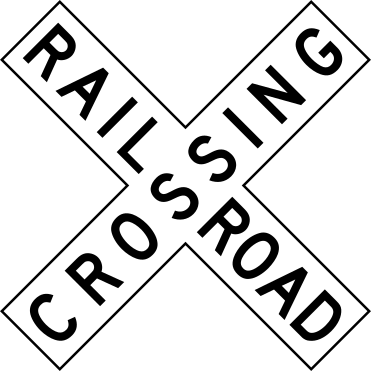
A railroad track crosses the road ahead; slow down, look, and listen for a train before crossing
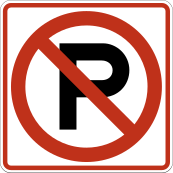
Parking is not allowed in this area
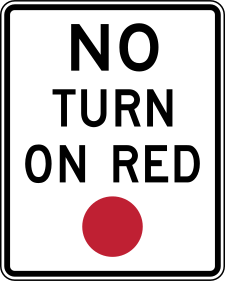
Drivers may not turn right at this intersection while the signal is red

Two lanes of traffic ahead are merging into one; be prepared to adjust speed and position

The road ahead curves; reduce speed as needed for the curve
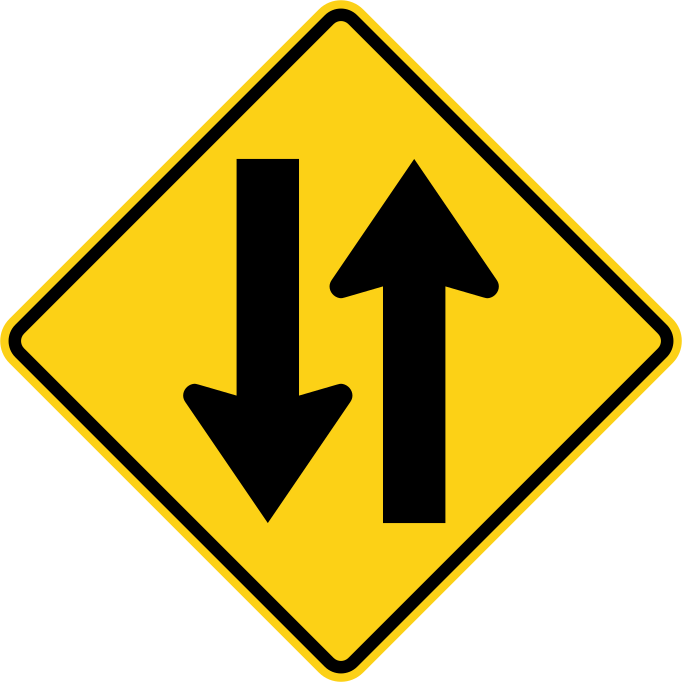
You are entering a section of road with traffic moving in both directions; stay in your lane

A stop sign is ahead; begin slowing down now to be able to stop when you reach it
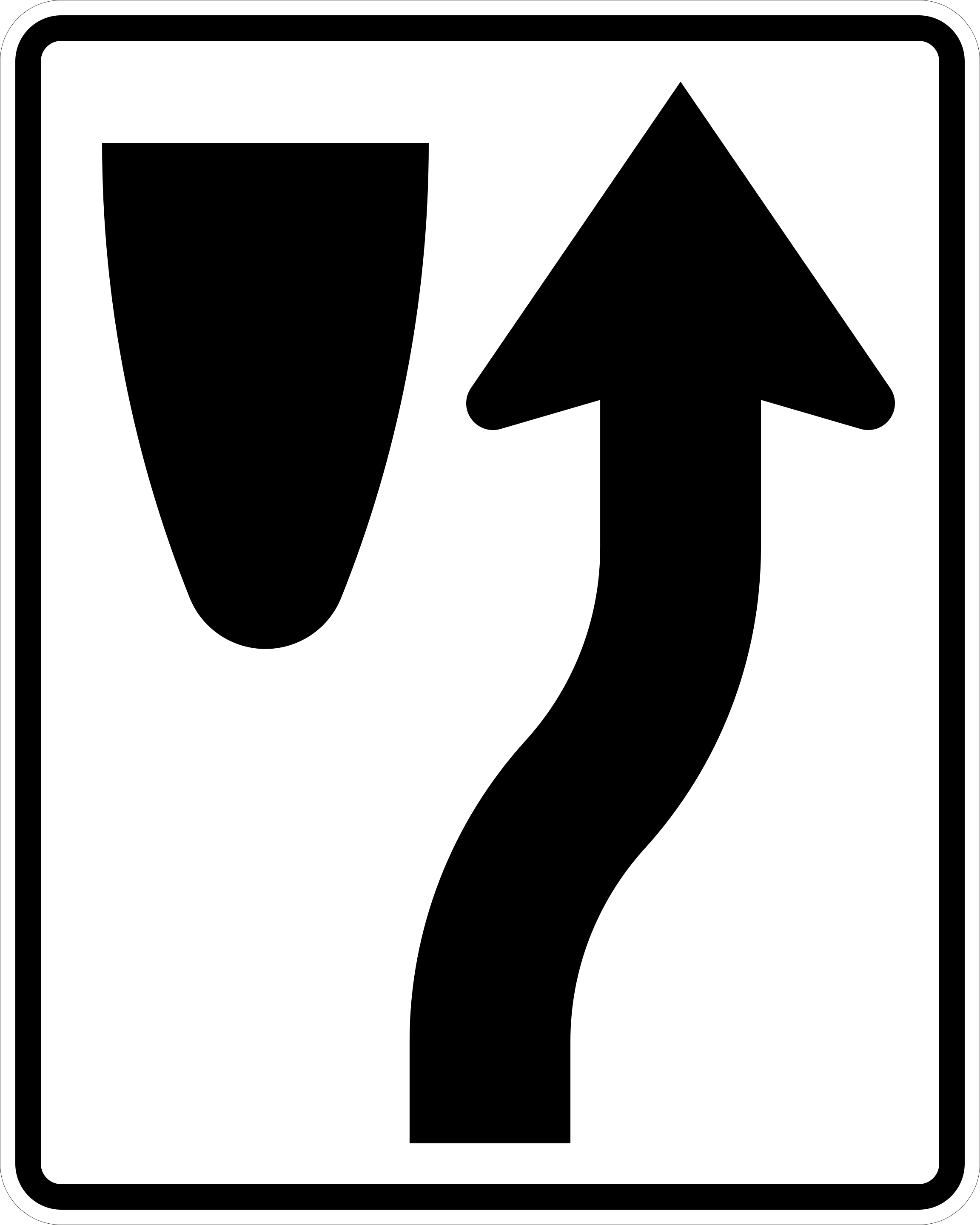
Drivers must keep to the right of a divider, island, or obstruction ahead
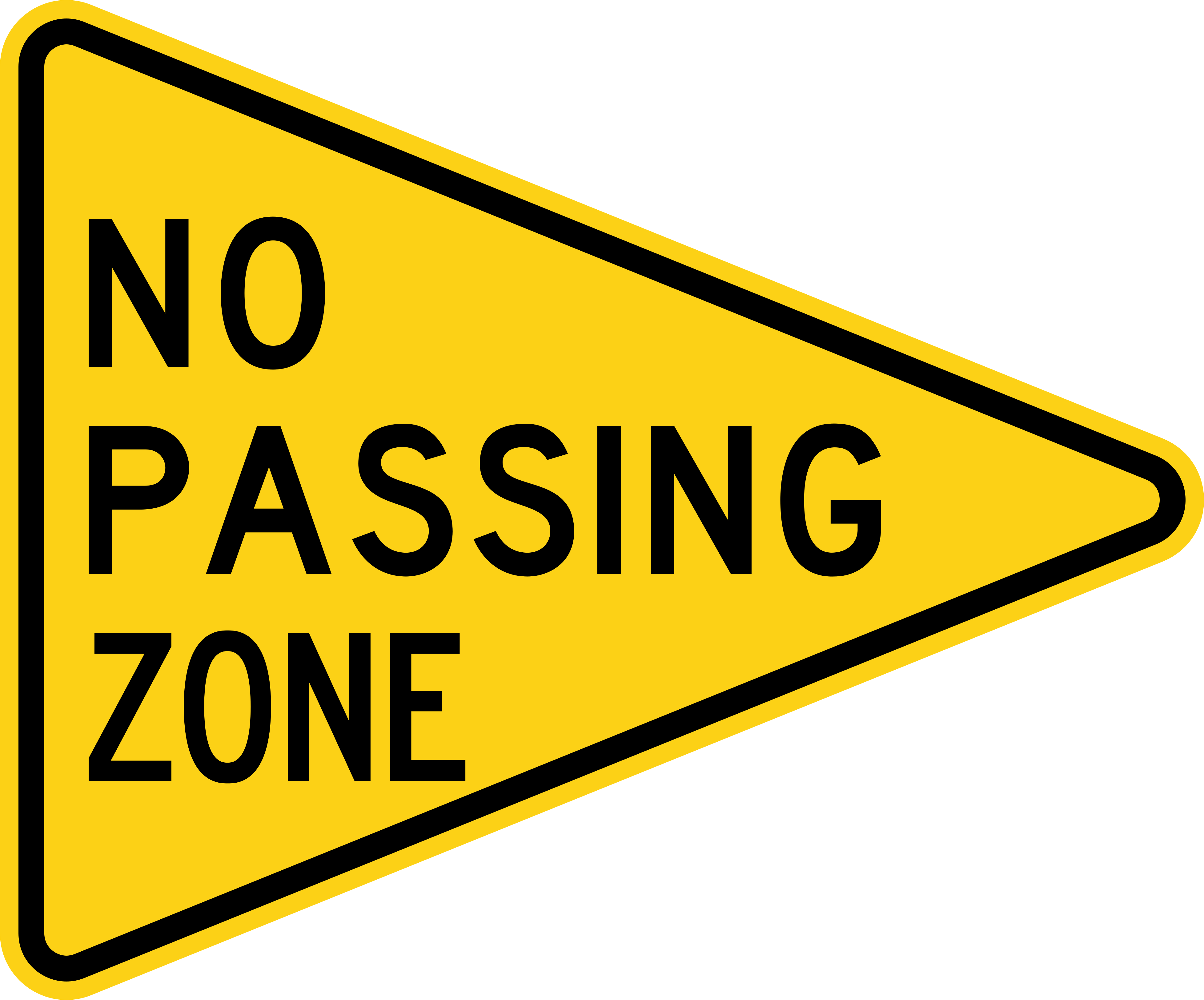
Passing other vehicles is prohibited in this zone

Watch for pedestrians and slow down or stop if needed

Slow down and watch for children crossing near the school

Watch for cyclists who may be crossing or entering the road ahead

Watch for deer crossing, especially at dawn or dusk
Last reviewed: 2026-07-07