Georgia Permit Test Cheat Sheet
A condensed, skimmable recap of the rules most worth knowing cold before your exam — distilled from our full Georgia practice question bank. This isn't a replacement for the Georgia Driver's Manual; confirm anything time-sensitive with Georgia DDS.
Right-of-Way
- No signs or signals? Yield to the car approaching from your right — same rule applies if you both reach a stop sign together.
- Left turns require letting oncoming traffic and any crossing pedestrians clear first.
- A car already on the road beats one entering from a driveway, alley, or parking lot.
- Yielding isn't optional just because you technically have the right-of-way — do it whenever it avoids a collision.
Traffic Signs
- Sign shape is a nationwide code: octagon for stop, downward triangle for yield, diamond for warnings, pentagon for school zones, circle for the railroad advance warning.
- Sign color follows the same logic: red for stop/yield/prohibition, orange for construction, yellow for warnings, white for regulatory rules.
- A red circle with a slash always means "not allowed," regardless of what's inside it.
- "Do Not Enter" and "Wrong Way" signs target drivers heading the wrong direction, typically at one-way streets and exit ramps.
Traffic Signals
- Solid red is a full stop; flashing red gets treated like a stop sign, no different.
- A flashing yellow signal (or a flashing yellow arrow, once you've yielded) just means proceed carefully — no complete stop needed.
- A green arrow protects your turn; opposing traffic sits on red the whole time it's lit.
- If a signal is completely dark, treat every approach like it has its own stop sign.
Lane Usage & Markings
- Yellow lane markings separate opposite-direction traffic; white ones separate same-direction lanes.
- Broken lines allow a lane change when it's safe to make one; solid lines discourage it, often near exits or intersections.
- A diamond on the pavement flags a restricted lane, most often reserved for carpools.
- A two-way left-turn lane serves drivers from both directions making a left, then clearing out right away.
Following Distance
- 3 seconds is the baseline in good weather; stretch it out in rain, fog, heavy traffic, or near large vehicles.
- Following too closely to stop if the car ahead brakes is tailgating, and it's a top cause of rear-end collisions.
Turning
- Signal well ahead of the turn, not as you're making it, so others have time to react.
- Right on red is generally fine once you've stopped fully and yielded, unless a sign forbids it specifically.
- Finish a left turn in the lane closest to the center line of the road you're entering, not one further over.
- Every U-turn needs a genuinely clear view of traffic both directions, on top of any posted restriction.
Passing
- A solid yellow line on your side blocks passing from your direction; two solid yellow lines block it both ways.
- You still can't exceed the speed limit while passing, even to get it over with faster.
- Hold off merging back until you can see the passed car's front end in your rearview mirror.
Freeway Driving
- Match your speed to traffic in the acceleration lane before merging — you don't get automatic right-of-way just by entering.
- Get into the exit lane and signal early; if you blow past your exit, continue to the next one rather than stopping or reversing.
- Right lanes tend to carry slower traffic and vehicles entering/exiting; left lanes are generally for passing.
Roundabouts
- Traffic flows counterclockwise, and anyone already circulating has the right-of-way over cars entering.
- Signal right just before exiting; if you miss it, loop around again instead of stopping or backing out.
Railroad Crossings
- Slow, look both ways, and listen before crossing, gates and lights or not.
- Settle on the right gear before crossing and don't shift mid-track — that's how stalls happen.
- Stopping on the tracks is never okay, and neither is going around a lowered gate, no matter how clear things look.
School Zones
- Children are less predictable and harder to spot than adults, so slow down and follow any crossing guard's lead.
- The reduced limit in a school zone only applies during its specific posted hours.
Pedestrians & Crosswalks
- Every intersection is a legal crosswalk, painted or not, and pedestrians there always have the right-of-way.
- Passing a car stopped for a pedestrian creates a "multiple threat" — that pedestrian might be right in your blind path.
- Always stop and yield for a white cane or guide dog, a clear signal of a visually impaired pedestrian.
Bicycles
- Bicycles are legally treated as vehicles, with the same road rights and the same duty to obey traffic law.
- Give a cyclist at least 3 feet of clearance when passing.
- Check for cyclists before swinging a car door open — "dooring" causes real crashes.
- Right-turning drivers frequently miss a cyclist going straight beside them, the classic setup for a "right hook."
Sharing the Road with Large Vehicles
- If a truck driver's mirror is out of your sight, you're probably out of theirs too.
- Trucks and buses need a wide swing before turning — don't try to fit into that gap.
- Cutting in close after passing a truck eats into the extra stopping distance it needs.
Move Over & Emergency Vehicles
- Shift a lane away from a stopped emergency, hazard, or maintenance vehicle when it's safe, or slow down noticeably if you can't.
- Pull right and stop for an approaching emergency vehicle unless told otherwise — but clear the intersection first if you're in one.
Parking
- Stay at least 15 feet clear of any fire hydrant.
- No curb, parked uphill: wheels away from traffic. Curb present, parked downhill: wheels into the curb — either way, gravity should send the car into the curb, not the road.
Defensive Driving
- Defensive driving assumes other drivers will slip up, and positions you to handle it safely when they do.
- A space cushion around your car gives you room and time to react to a hazard from any side.
- Scanning further down the road, not just what's directly ahead, buys you earlier warning of trouble.
Weather Conditions
- In fog, low beams see farther — high beams just bounce the light back at you off the water droplets.
- Hydroplaning? Ease off the gas rather than braking or steering hard, so the tires can reconnect with the road.
- The first rain after a dry spell tends to be the slickest, lifting oil and grime before it washes away.
- Headlights go on whenever visibility drops, day or night — rain, fog, and snow all count.
Night Driving
- Drop to low beams around 500 feet from an oncoming car so you don't blind them.
- Judging distance and speed gets harder after dark simply because you can see less.
- Look to the right edge of your lane rather than at oncoming headlights, to keep your night vision intact.
Fatigue & Drowsy Driving
- Yawning, heavy eyelids, and lane drift are the body's early warnings that it's losing the fight to stay awake.
- Coffee and similar tricks only delay drowsiness — actual sleep or a driver swap is the only real solution.
- Enough hours without sleep can impair your driving as much as being over the legal alcohol limit.
Vehicle Equipment
- Headlights are typically required from half an hour after sunset to half an hour before sunrise, plus anytime visibility is poor.
- Bald tires lose grip on wet roads fast — tread is what channels water away from the road surface.
- Save the horn for safety warnings, not greetings or frustration.
Backing Up & Reversing
- Don't rely on mirrors alone — look through the rear window directly too.
- A car backing out is entering a path others already occupy, so yielding is the backing driver's job.
Work Zones
- Fines are typically doubled in an active, posted work zone.
- A flagger overrides the standard signs and signals in that stretch of road.
Insurance & Registration
- Drivers generally need proof of financial responsibility, usually liability insurance, on hand at all times.
- Keep your license, registration, and insurance ready for any traffic stop.
Hand Signals
- A horizontal left arm out the window signals a left turn if your signal lights fail.
- A left arm bent up at the elbow, hand pointing skyward, signals a right turn.
After a Collision
- Injuries and a 911 call come before any paperwork.
- Exchange name, address, registration, license, and insurance details with everyone involved — leaving without doing so counts as hit-and-run.
- Fault often isn't clear right after a crash, so it gets sorted out afterward, not decided on the spot.
Interstate Highway System
- Interstates follow a national numbering pattern: odd numbers run generally north-south, even numbers generally east-west.
DUI, Alcohol & Drugs
- Georgia's zero tolerance law sets the BAC threshold for drivers under 21 at 0.02%, far below the 0.08% adult limit.
- Commercial drivers are held to a stricter 0.04% BAC limit, half the standard 0.08% adult limit.
- Alcohol impairs judgment, reaction time, coordination, and vision — all critical for safe driving, even below the legal limit.
Distracted Driving
- Georgia's hands-free law bans holding a phone at all while driving — only hands-free use is allowed.
- The brain can't truly focus on two demanding tasks at once; it switches rapidly between them, slowing reaction time.
Seatbelts & Child Safety
- Georgia requires passengers ages 8 through 17 to buckle up in any seat; adults 18 and older in the rear seat aren't separately required to.
School Buses
- Traffic in both directions on an undivided road must stop for a school bus with flashing red lights and remain stopped until the lights stop.
Licensing & Provisional Rules
- Georgia allows applicants to obtain a learner's permit starting at age 15.
Speed Limits
- The basic speed law requires a safe speed for conditions, even below the posted limit if needed.
Signs to Know
Quick visual recap of commonly tested signs — see the full Permit practice test for sign-recognition questions.
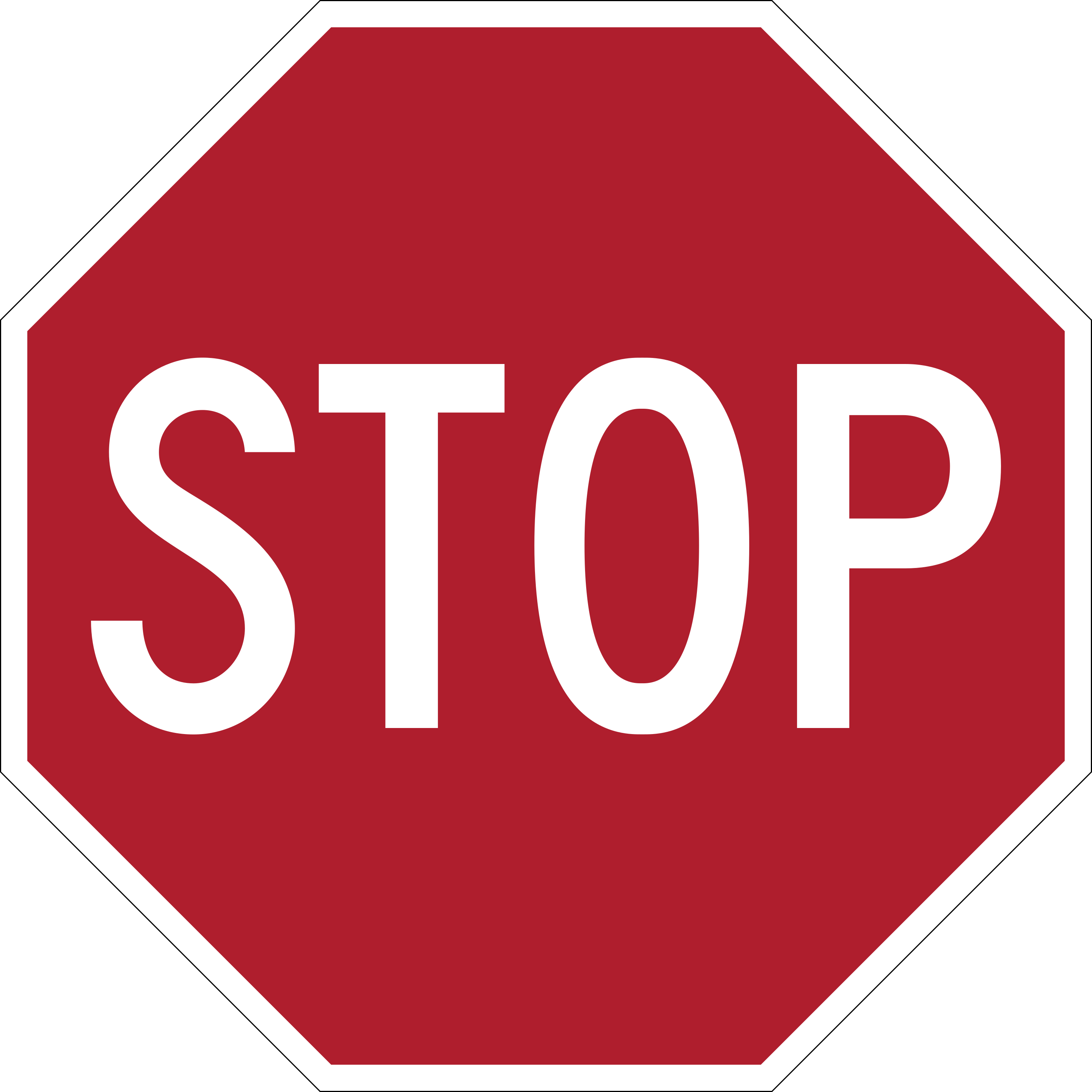
Come to a complete stop, then proceed only when it is safe to do so
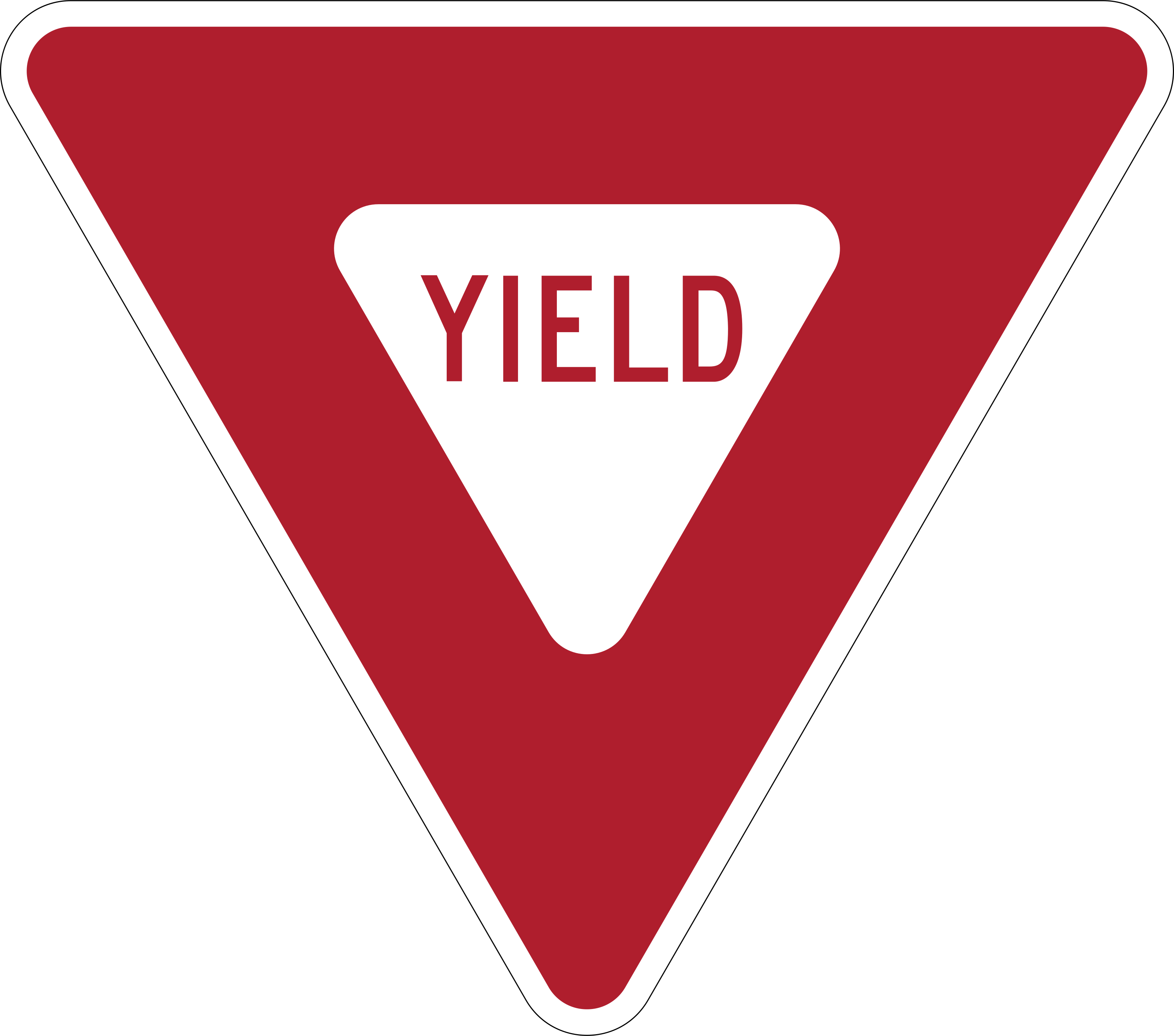
Slow down and be ready to stop, giving the right-of-way to other traffic or pedestrians
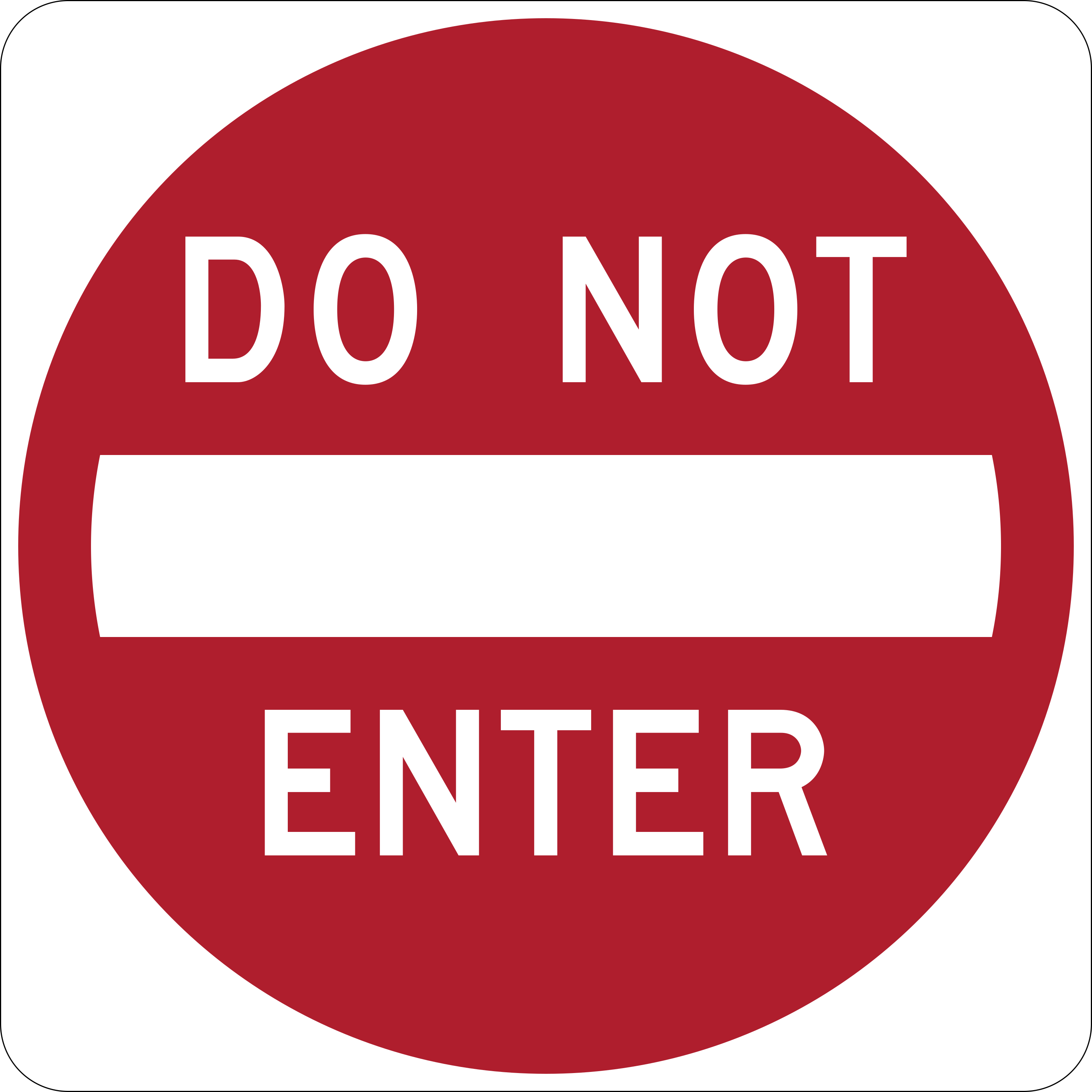
Do not drive past this sign in this direction; the roadway is closed to traffic entering here
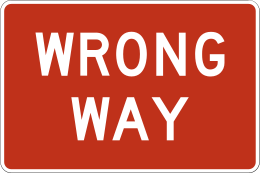
You are driving against the flow of traffic and must safely turn around or stop immediately
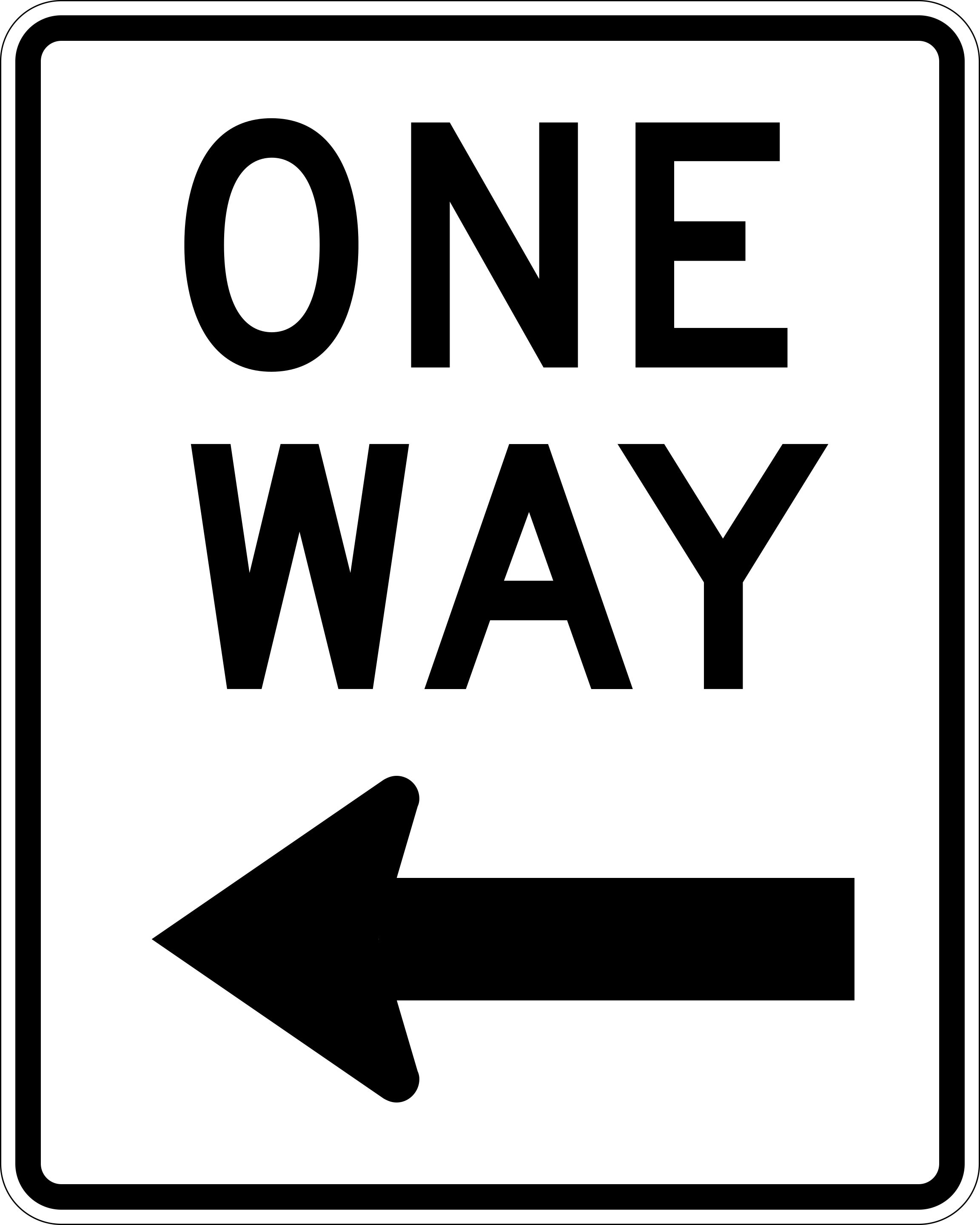
Traffic on this road or lane may only travel in the direction the arrow points
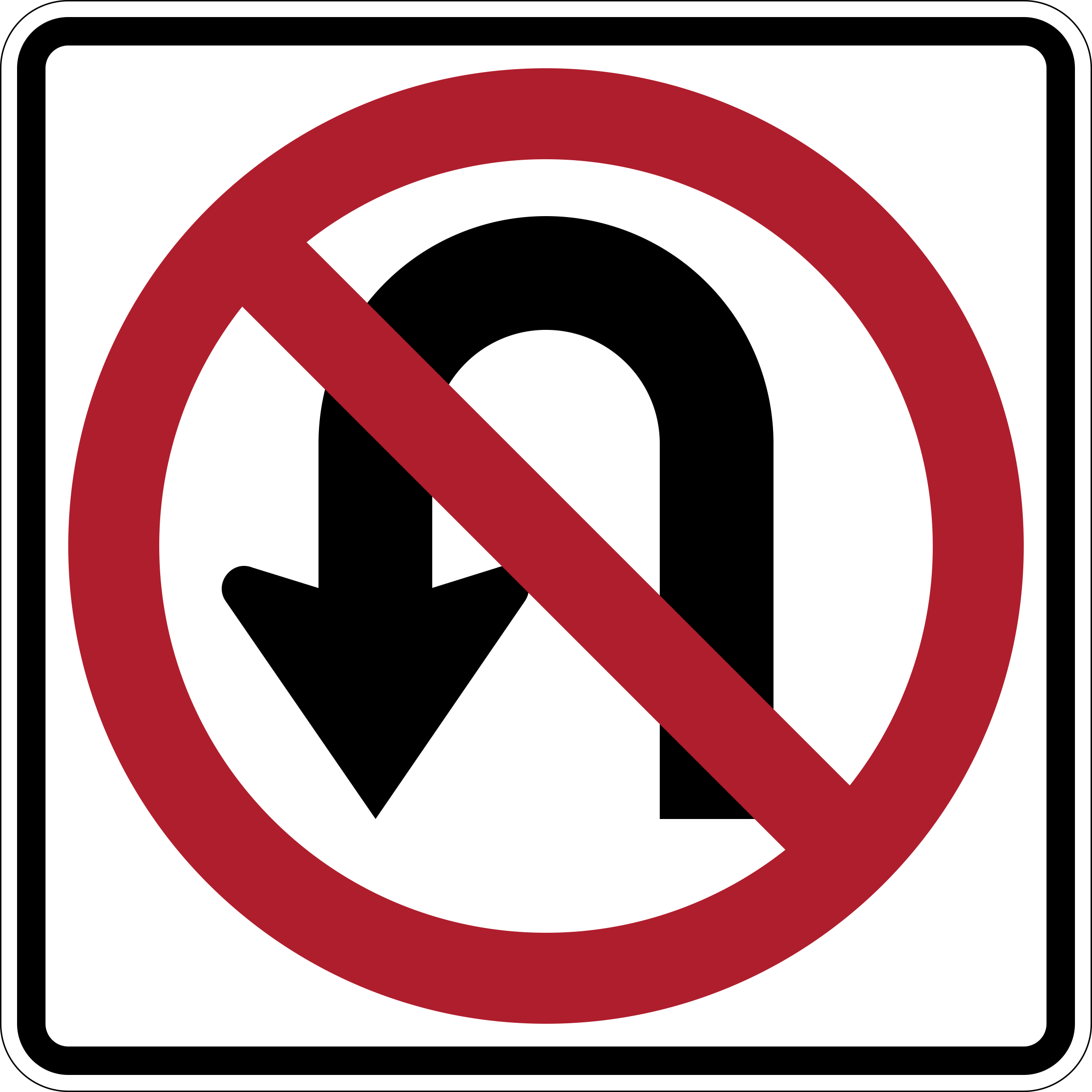
Making a U-turn is prohibited at this location
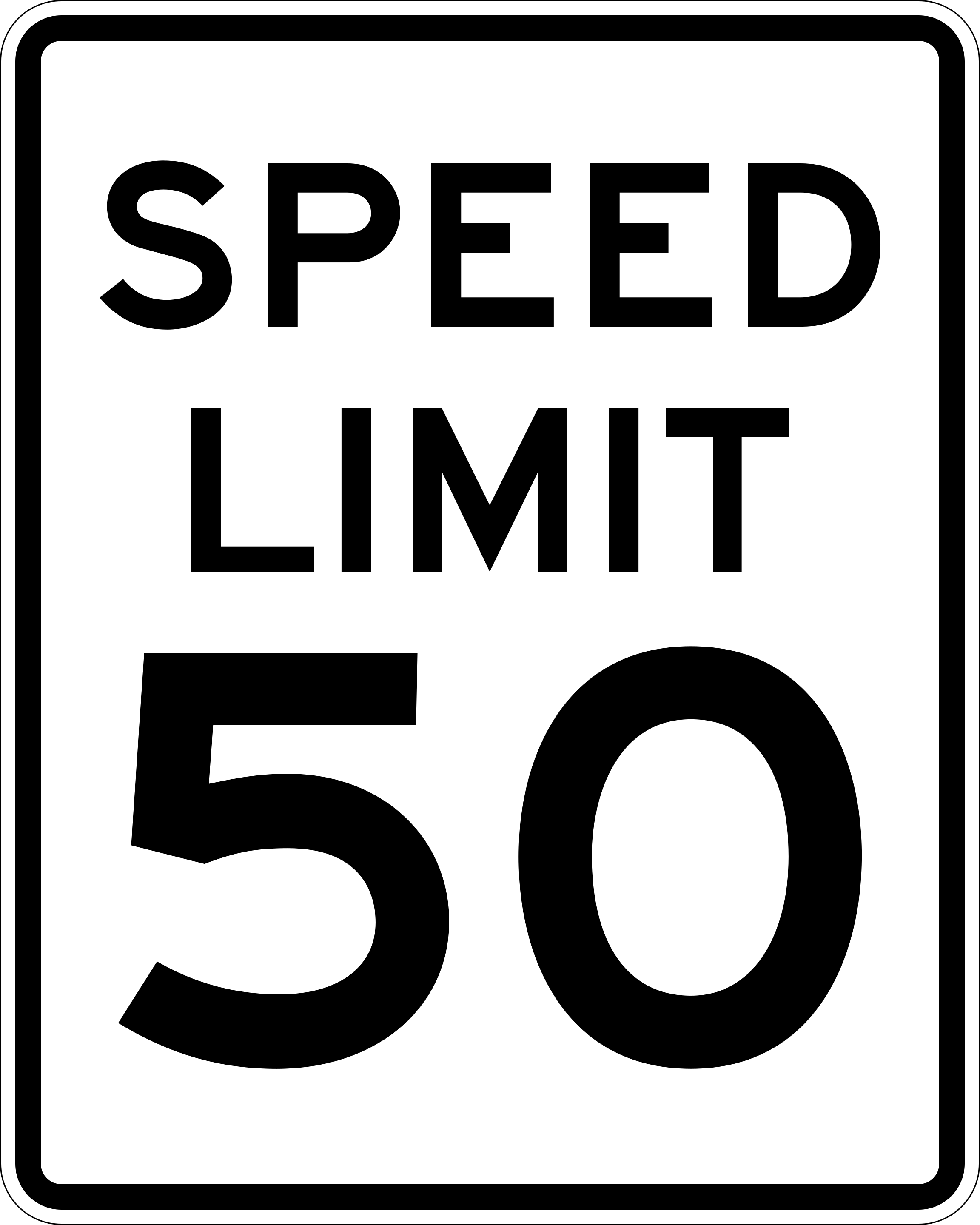
The maximum legal speed under normal conditions on this road is 55 mph
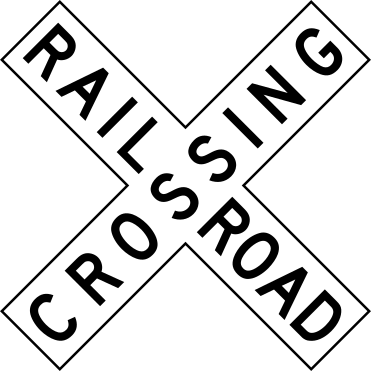
A railroad track crosses the road ahead; slow down, look, and listen for a train before crossing
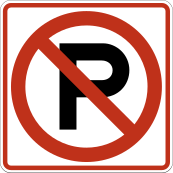
Parking is not allowed in this area
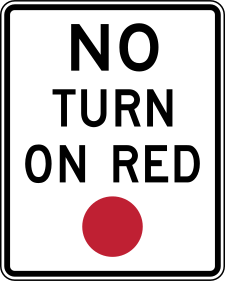
Drivers may not turn right at this intersection while the signal is red

Two lanes of traffic ahead are merging into one; be prepared to adjust speed and position

The road ahead curves; reduce speed as needed for the curve
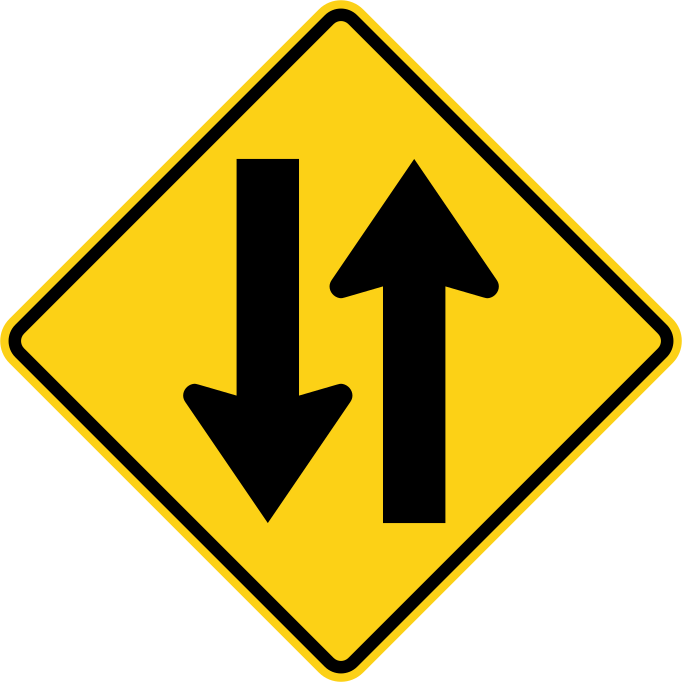
You are entering a section of road with traffic moving in both directions; stay in your lane

A stop sign is ahead; begin slowing down now to be able to stop when you reach it
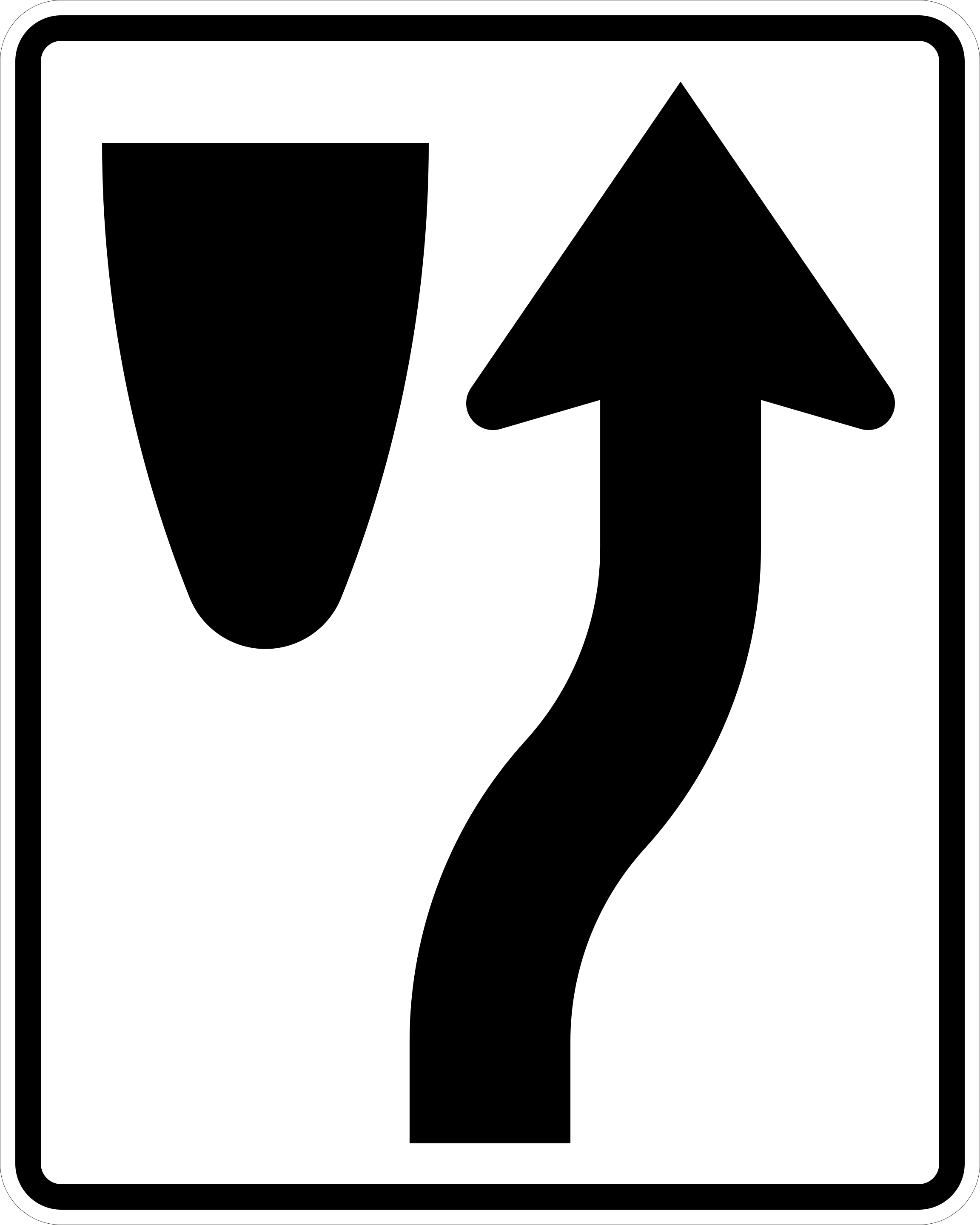
Drivers must keep to the right of a divider, island, or obstruction ahead
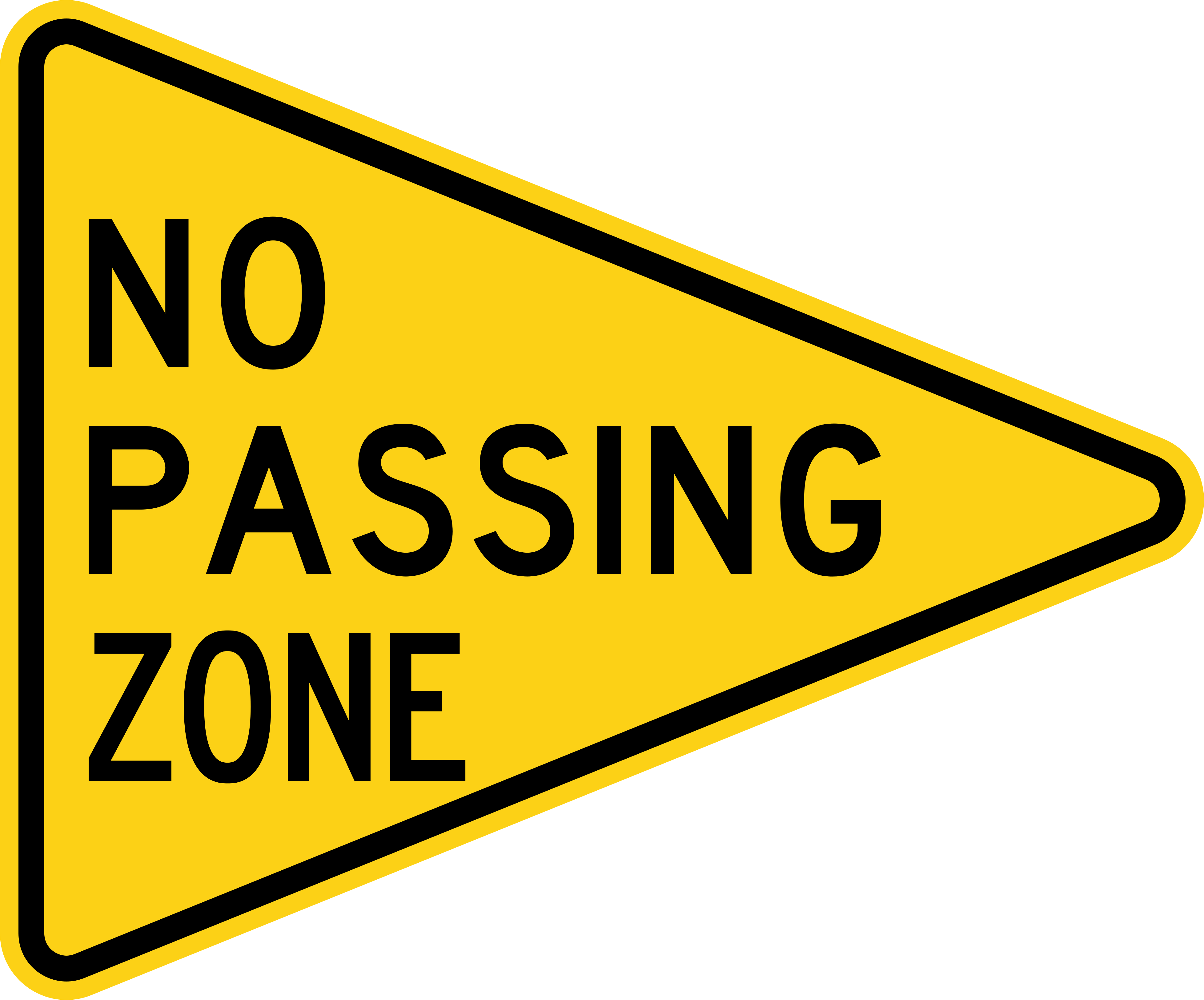
Passing other vehicles is prohibited in this zone

Watch for pedestrians and slow down or stop if needed

Slow down and watch for children crossing near the school

Watch for cyclists who may be crossing or entering the road ahead

Watch for deer crossing, especially at dawn or dusk
Last reviewed: 2026-07-14