Tennessee Permit Test Cheat Sheet
A condensed, skimmable recap of the rules most worth knowing cold before your exam — distilled from our full Tennessee practice question bank. This isn't a replacement for the Tennessee Comprehensive Driver License Manual; confirm anything time-sensitive with TDOSHS.
Tennessee Licensing & Law
- The Department of Safety and Homeland Security handles driver licensing — a distinctive agency name bundling driver services with homeland security.
- The knowledge test is 30 questions, 80% (24 correct) to pass, within a 60-minute time limit.
- Applicants 15-17 can test at home, supervised by a parent or guardian via the Tennessee Proctor ID App; adults 18+ test in person at a Driver Services Center.
- Learner permit minimum age is 15; hold it 180 days before advancing to an Intermediate Restricted license.
- 50 hours of supervised driving, including 10 at night, must be verified by a parent, guardian, or driving instructor.
- A learner permit holder must be accompanied by someone at least 21 with a valid driver license.
Intermediate Restricted License Rules
- Only one passenger allowed, unless that passenger is 21+ and licensed, or a sibling with parental authorization for school travel.
- No driving 11 p.m. to 6 a.m., with exceptions for a licensed parent/guardian, a parent-designated 21+ driver, or work/school events.
DUI, Alcohol & Drugs
- Tennessee's zero-tolerance law means any detectable amount of alcohol at all can result in a DUI charge for a driver under 21.
- Commercial drivers are held to 0.04% BAC, even in a personal, noncommercial vehicle.
- Alcohol degrades judgment, reaction time, coordination, and vision — all necessary for safe driving, even below the legal limit.
Distracted Driving
- Tennessee's hands-free law makes it illegal to hold a cell phone or mobile device with any part of the body while driving.
Right-of-Way
- With no signs or signals controlling an intersection, yield to whoever approaches from your right.
- A driver turning left has to let oncoming traffic and crossing pedestrians clear before completing the turn.
- A vehicle already on the roadway has the right-of-way over one entering from a driveway, alley, or parking lot.
Traffic Signals
- A solid red light means a full stop; treat a flashing red exactly like a stop sign.
- A flashing yellow signal means proceed with caution — no full stop is required.
- If a signal is dark or malfunctioning, treat the intersection as if every approach had its own stop sign.
Traffic Signs
- Shape is a nationwide code: octagon means stop, downward-pointing triangle means yield, diamond means warning.
- Color carries meaning too — red for stop/yield/prohibition, orange for construction, yellow for warnings.
- A red circle with a diagonal slash is the standard national way to say an action isn't allowed.
Lane Markings & Usage
- Yellow lines separate opposing directions of traffic; white lines separate lanes traveling the same direction.
- A broken line permits a lane change when safe; a solid line discourages crossing.
Turning
- Signal well ahead of the turn itself, so other drivers actually have time to react.
- A right turn on red is generally legal after a complete stop and yielding, unless a posted sign says otherwise.
- A safe U-turn always needs a clear view of traffic in both directions.
Passing
- A double solid yellow line prohibits passing for traffic in either direction.
- The posted speed limit still applies mid-pass.
Following Distance
- Hold at least a 3-second gap in normal conditions, and stretch that further in rain, fog, or heavy traffic.
- Tailgating is a leading cause of rear-end crashes.
Freeway Driving
- Use the acceleration lane to match highway speed before merging.
- Signal and move into the exit lane well ahead of your exit.
Roundabouts
- Traffic circulates counterclockwise, and vehicles already inside have the right-of-way over ones entering.
Railroad Crossings
- Slow down, look both ways, and listen before crossing, even where there are no gates or lights.
- Never stop on the tracks, and never drive around a lowered gate.
Pedestrians & Crosswalks
- Every intersection is a legal crosswalk, marked or not, and pedestrians there have the right-of-way.
- A white cane or guide dog marks a visually impaired pedestrian — stop and yield without exception.
School Zones
- Children move less predictably than adult pedestrians, so slow down and follow any crossing guard's directions.
Bicycles
- Cyclists are generally treated as vehicle operators, with the same rights and duty to follow traffic law.
- Give a cyclist at least 3 feet of clearance when passing.
Sharing the Road with Large Vehicles
- If you can't see a truck driver's mirrors, assume they can't see you either.
- Trucks need much more distance to stop than a car does.
Move Over & Emergency Vehicles
- Move over a lane away from a stopped emergency vehicle when safe, or slow down noticeably if you can't change lanes.
Night Driving
- Switch to low beams within roughly 500 feet of an oncoming vehicle so you don't blind the other driver.
Fatigue & Drowsy Driving
- Yawning, heavy eyelids, and drifting out of your lane are early signs your body is losing the fight to stay alert.
Vehicle Equipment
- Headlights are generally required starting a half hour after sunset through a half hour before sunrise.
Work Zones
- Fines commonly double for violations inside a posted, active construction or maintenance zone.
Insurance & Registration
- Drivers must be ready to present a license, registration, and proof of insurance at any traffic stop.
After a Collision
- Check for injuries and call 911 before dealing with any paperwork.
- Stop and exchange information with everyone involved — leaving without doing so is a hit-and-run.
Seatbelts & Child Safety
- Tennessee law requires a seatbelt for the driver and every passenger, front seat and back.
School Buses
- Traffic in both directions on an undivided road must stop for a school bus with flashing red lights, and wait until the lights stop flashing.
Speed Limits
- The basic speed law requires a safe speed for conditions, which can be lower than the posted limit.
Signs to Know
Quick visual recap of commonly tested signs — see the full Permit practice test for sign-recognition questions.
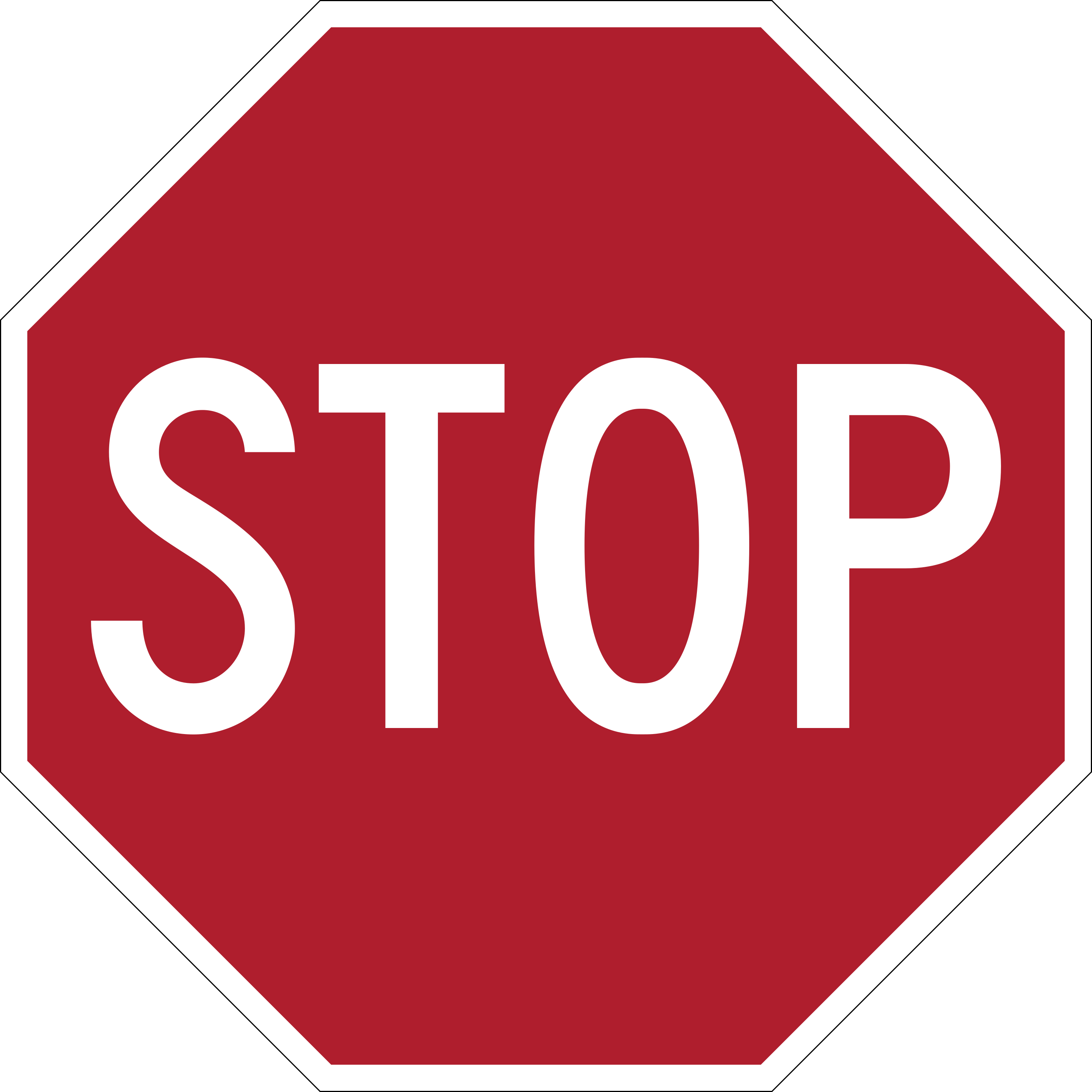
Come to a complete stop, then proceed only when it is safe to do so
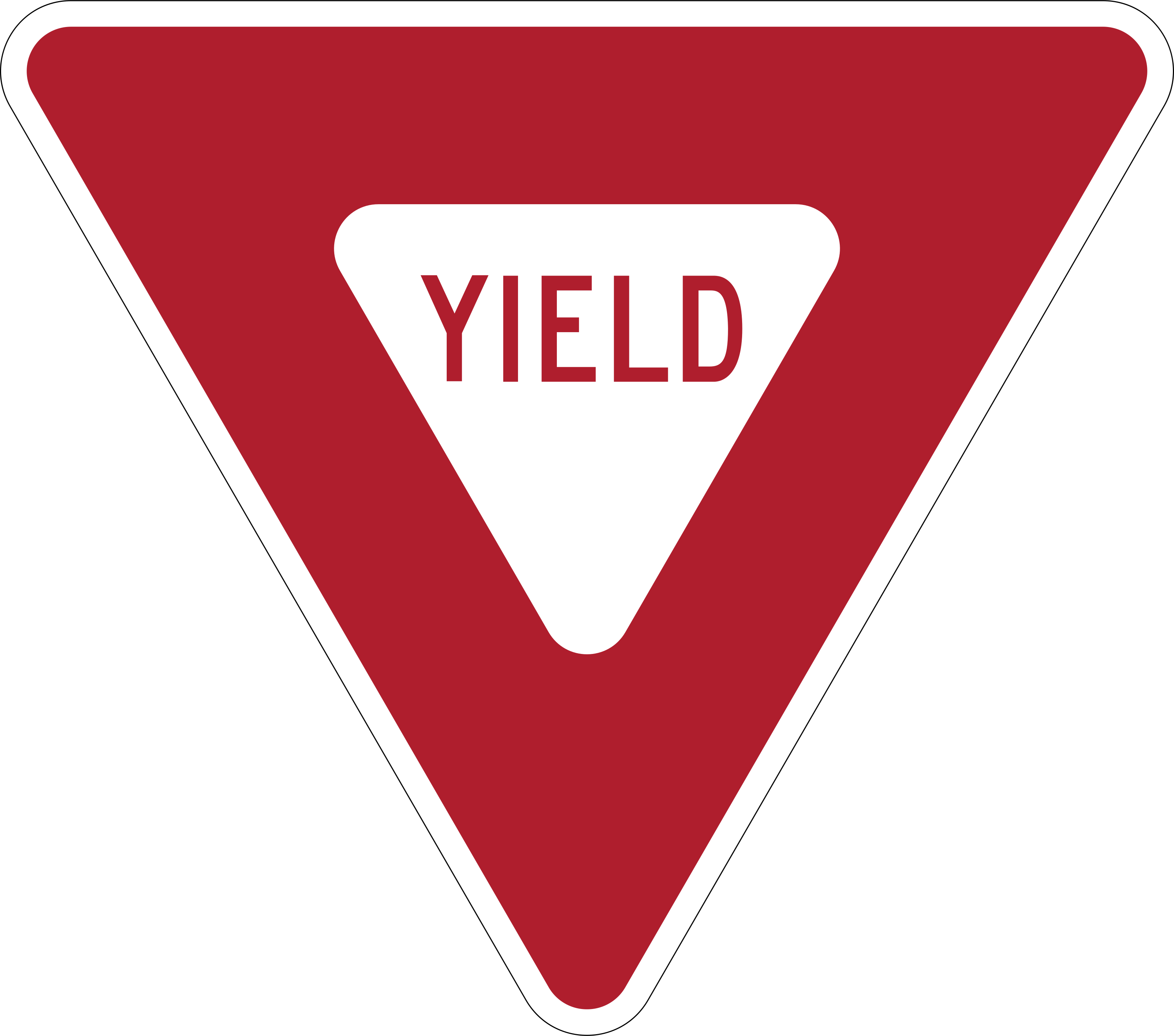
Slow down and be ready to stop, giving the right-of-way to other traffic or pedestrians
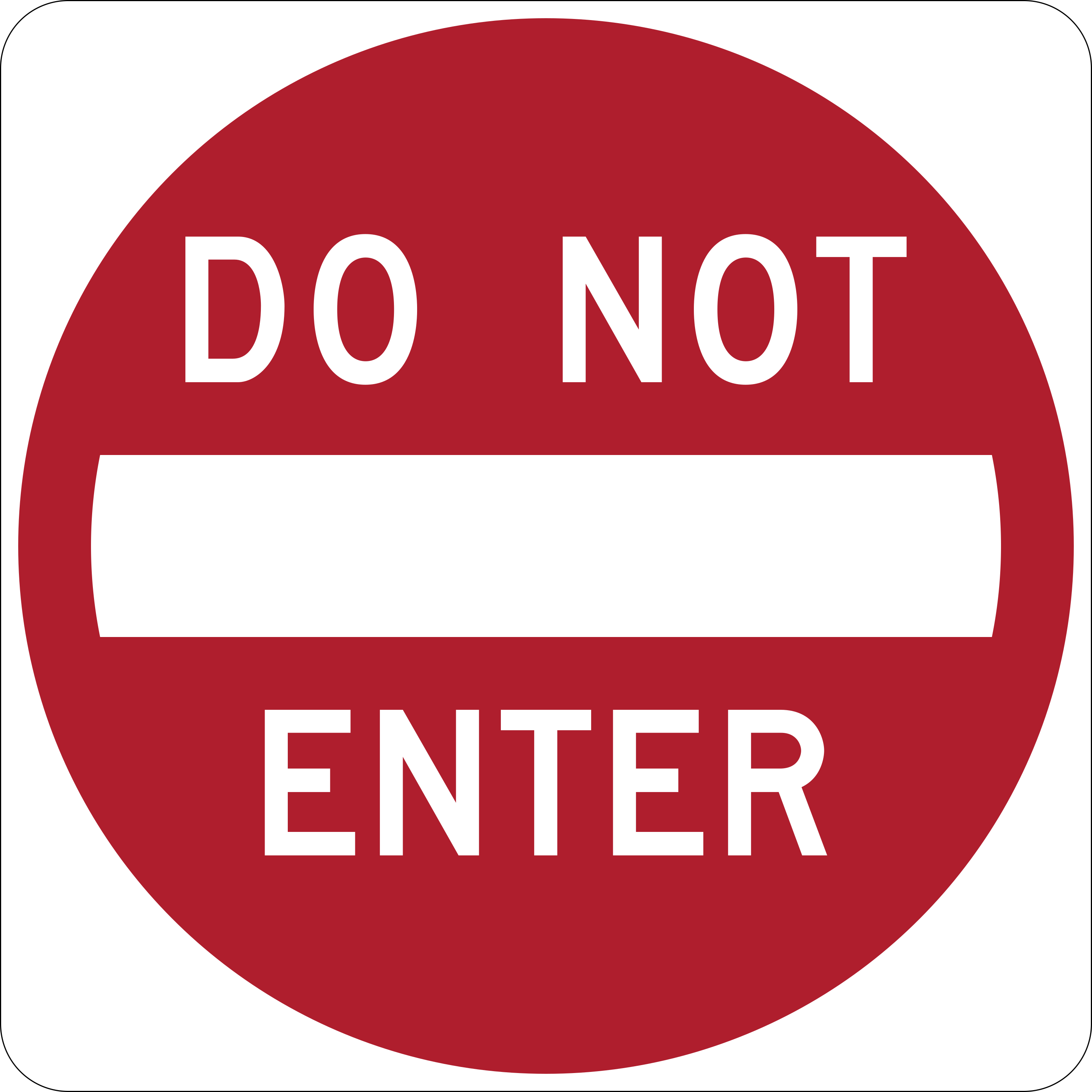
Do not drive past this sign in this direction; the roadway is closed to traffic entering here
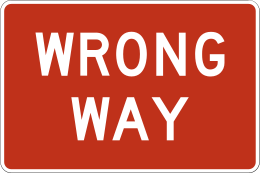
You are driving against the flow of traffic and must safely turn around or stop immediately
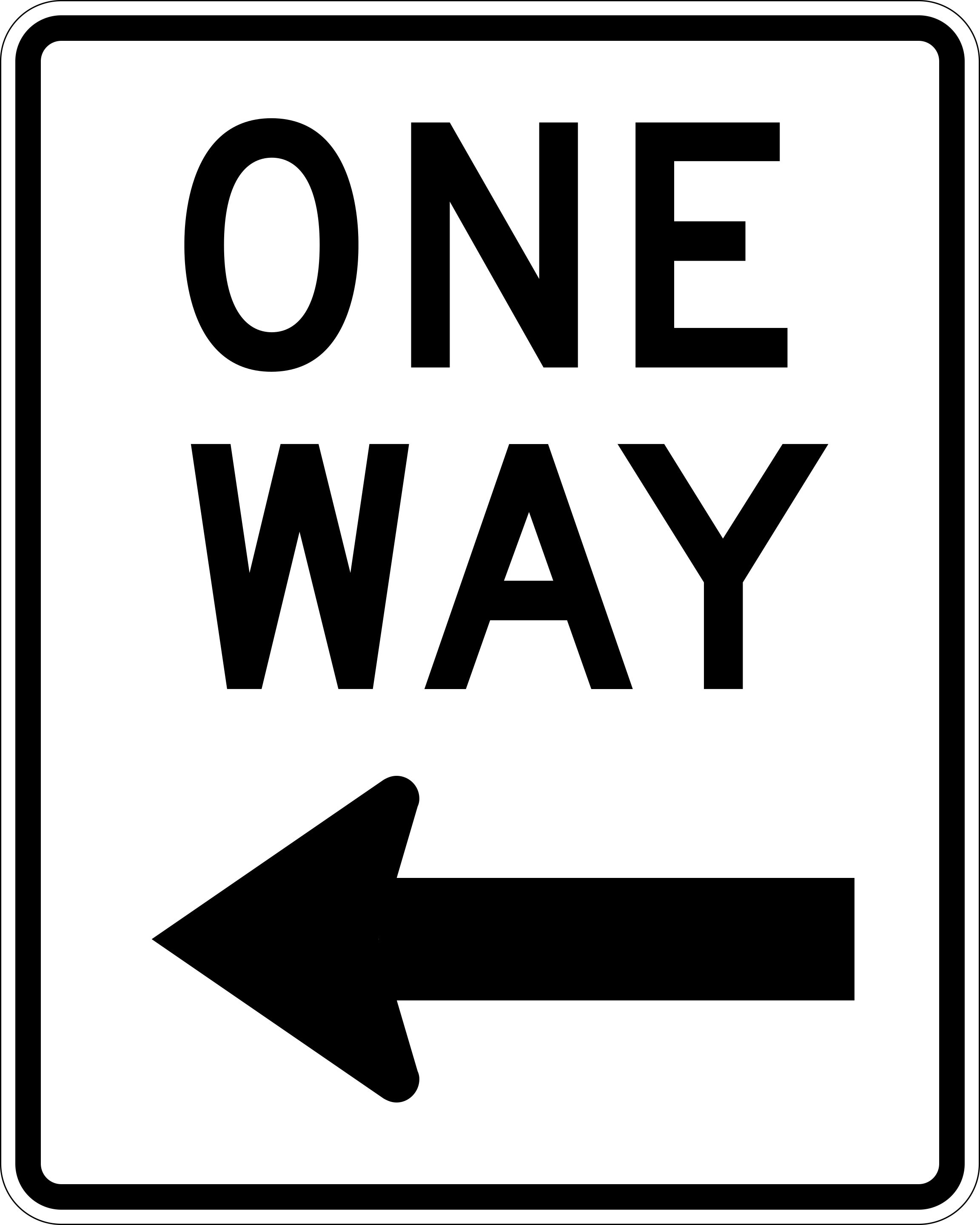
Traffic on this road or lane may only travel in the direction the arrow points
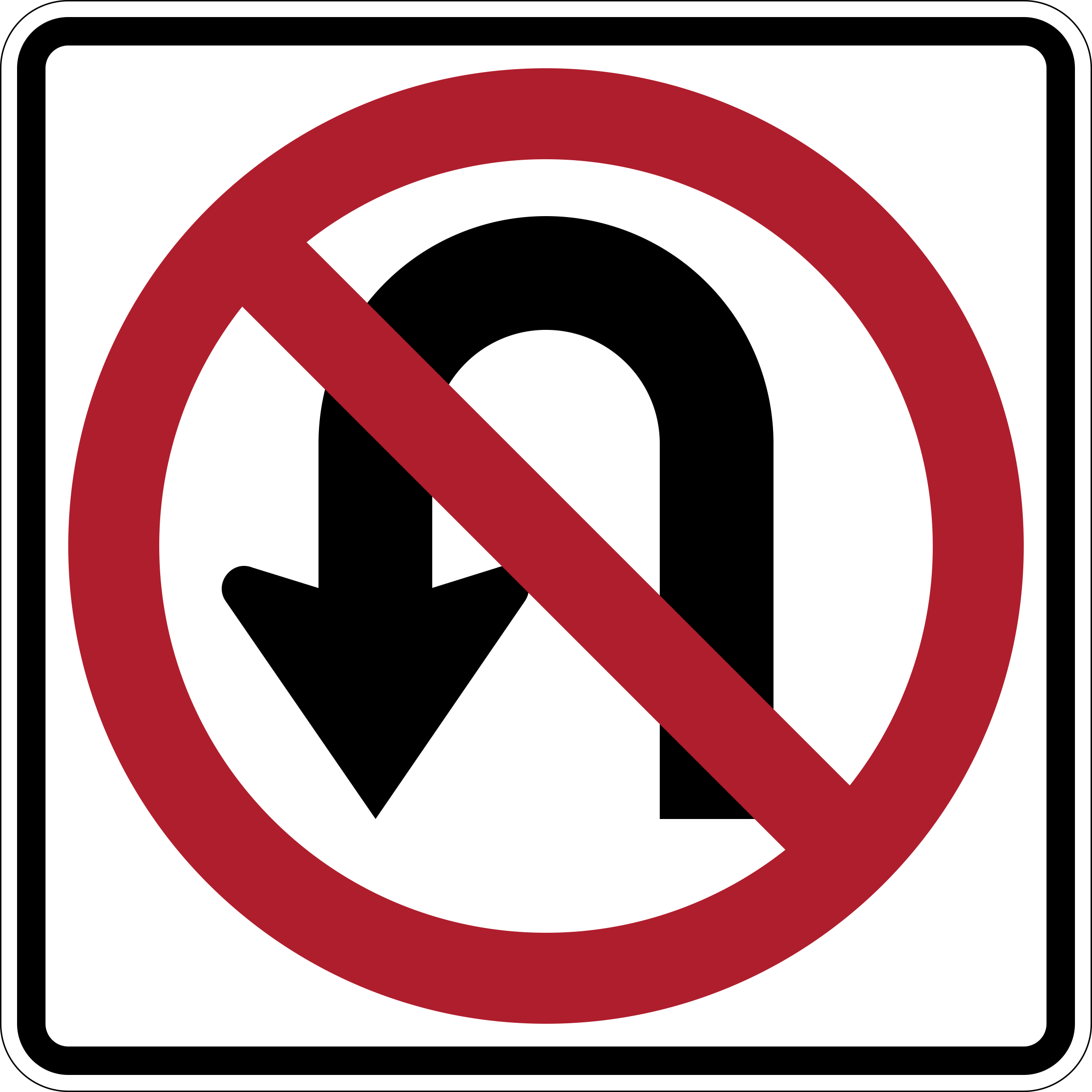
Making a U-turn is prohibited at this location
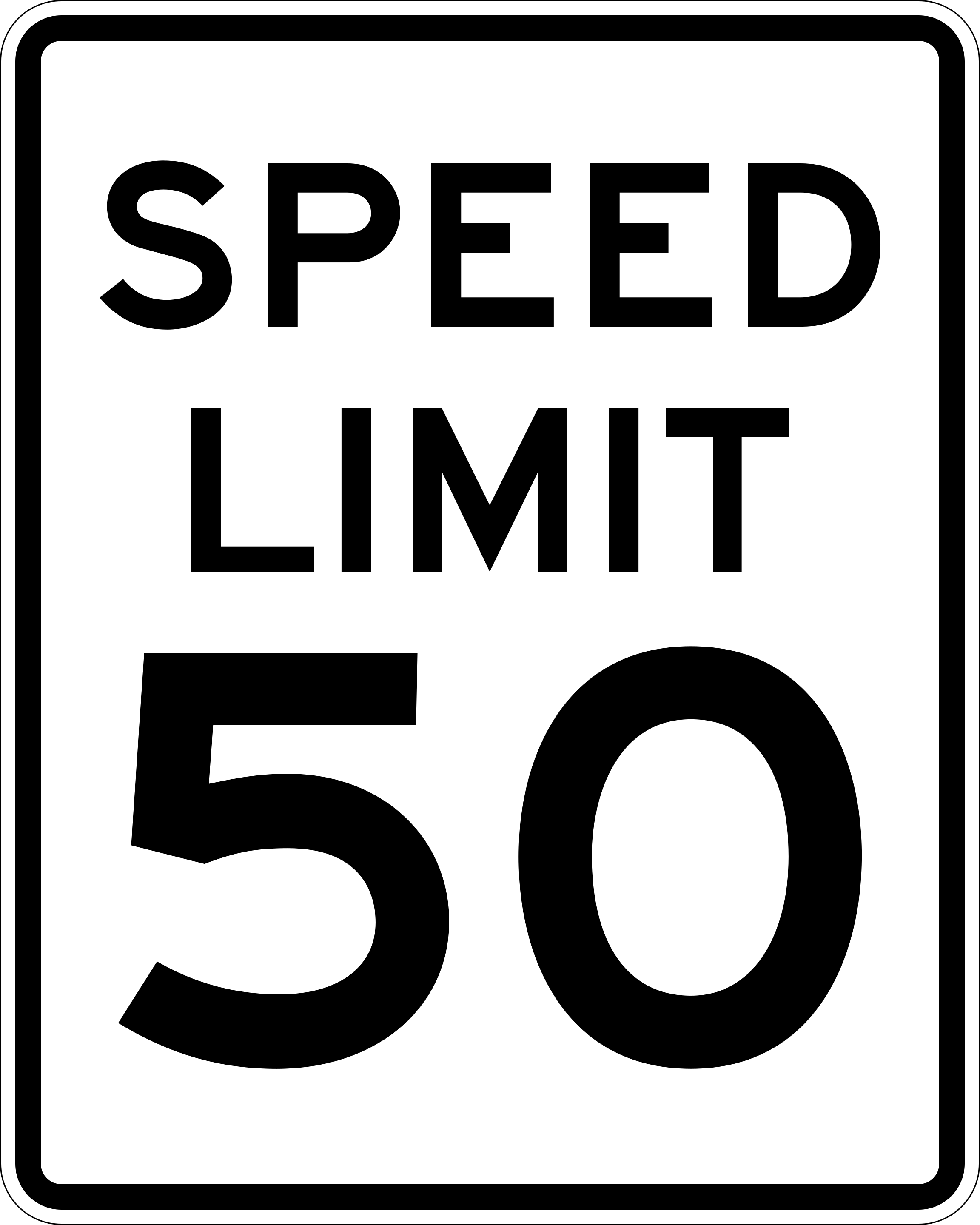
The maximum legal speed under normal conditions on this road is 55 mph
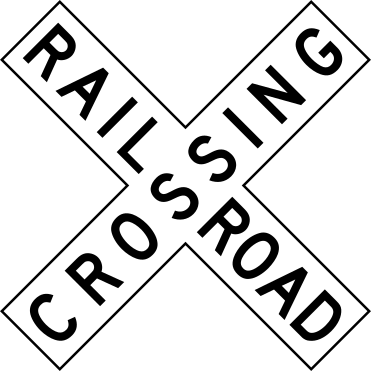
A railroad track crosses the road ahead; slow down, look, and listen for a train before crossing
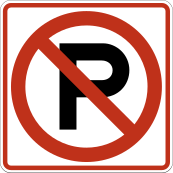
Parking is not allowed in this area
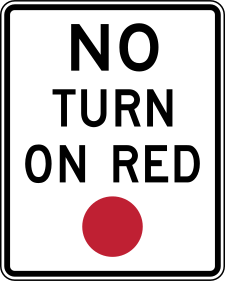
Drivers may not turn right at this intersection while the signal is red

Two lanes of traffic ahead are merging into one; be prepared to adjust speed and position

The road ahead curves; reduce speed as needed for the curve
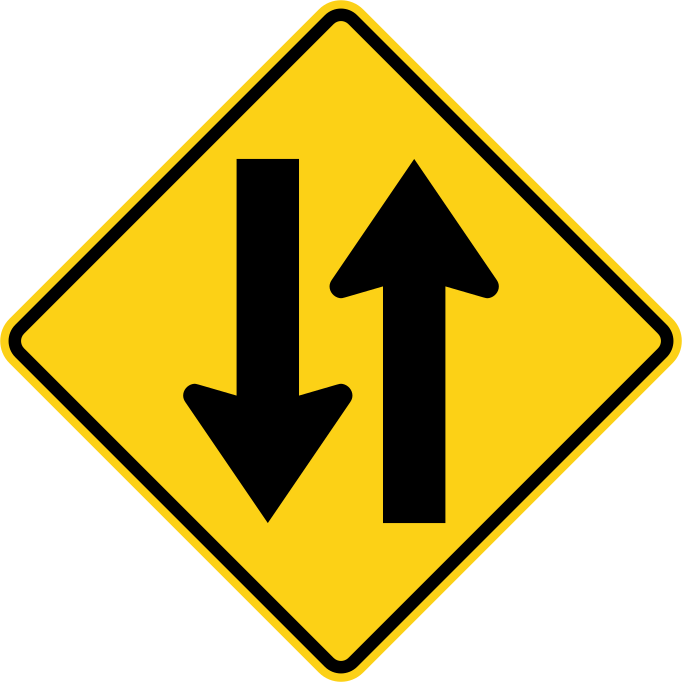
You are entering a section of road with traffic moving in both directions; stay in your lane

A stop sign is ahead; begin slowing down now to be able to stop when you reach it
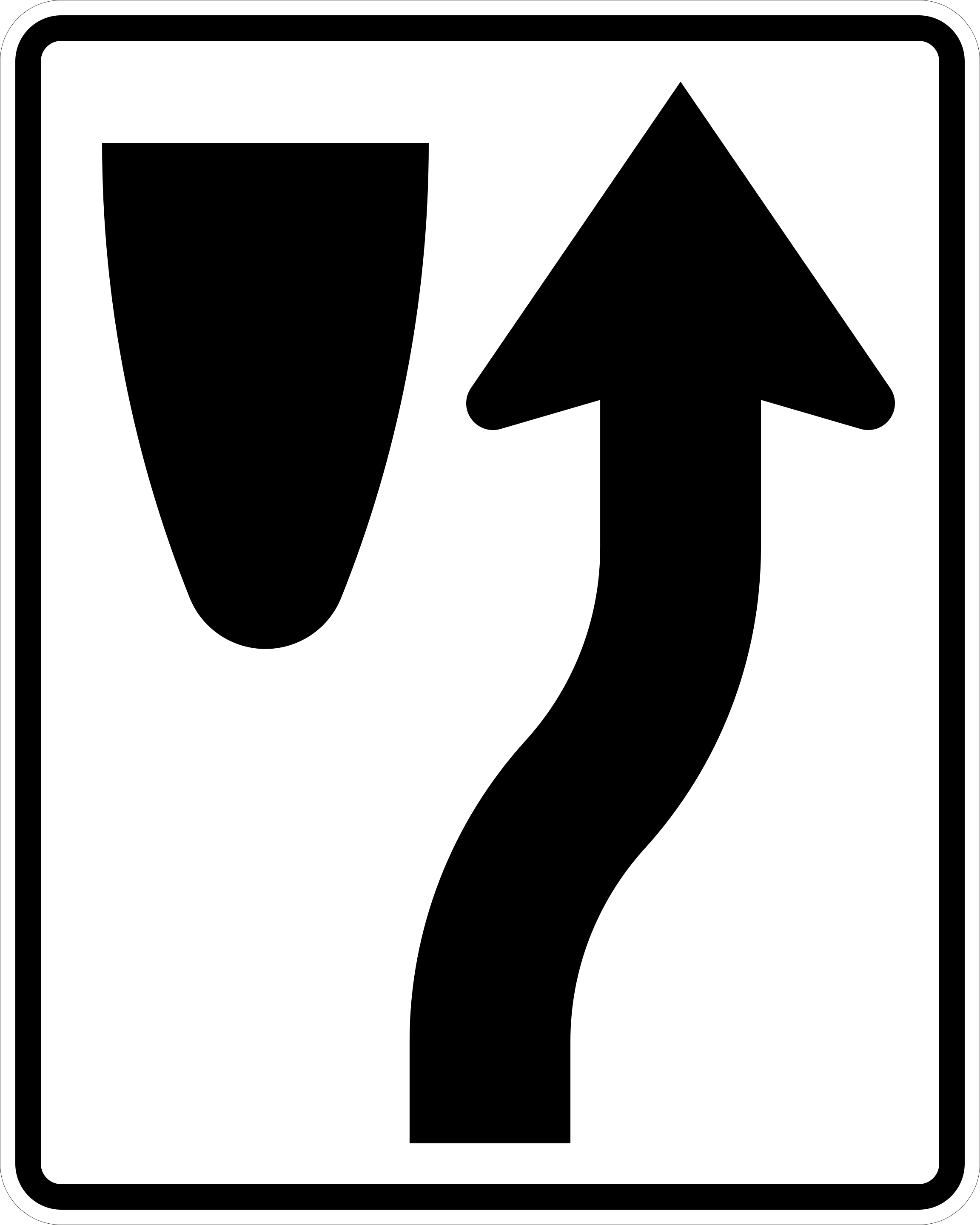
Drivers must keep to the right of a divider, island, or obstruction ahead
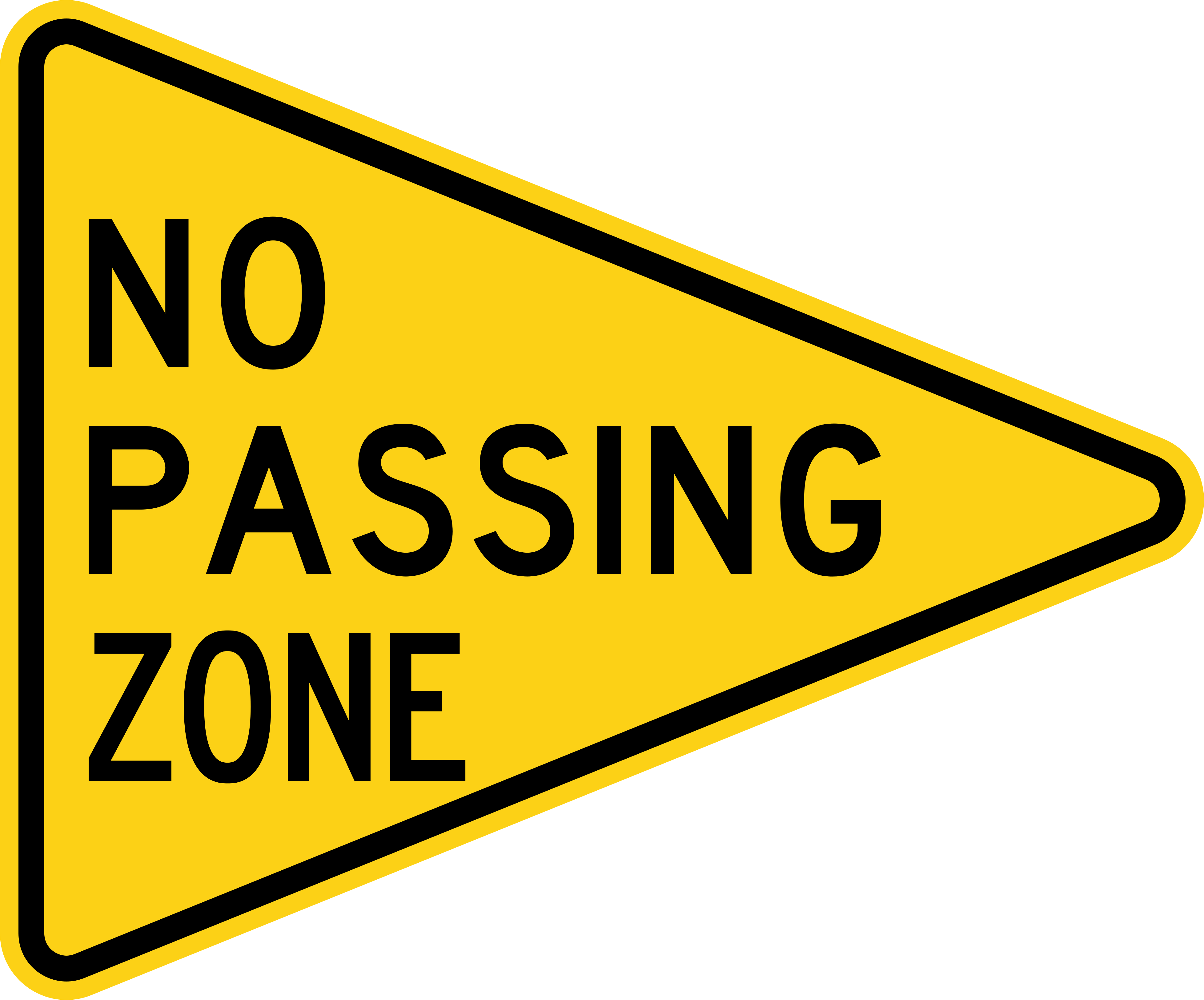
Passing other vehicles is prohibited in this zone

Watch for pedestrians and slow down or stop if needed

Slow down and watch for children crossing near the school

Watch for cyclists who may be crossing or entering the road ahead

Watch for deer crossing, especially at dawn or dusk
Last reviewed: 2026-07-20